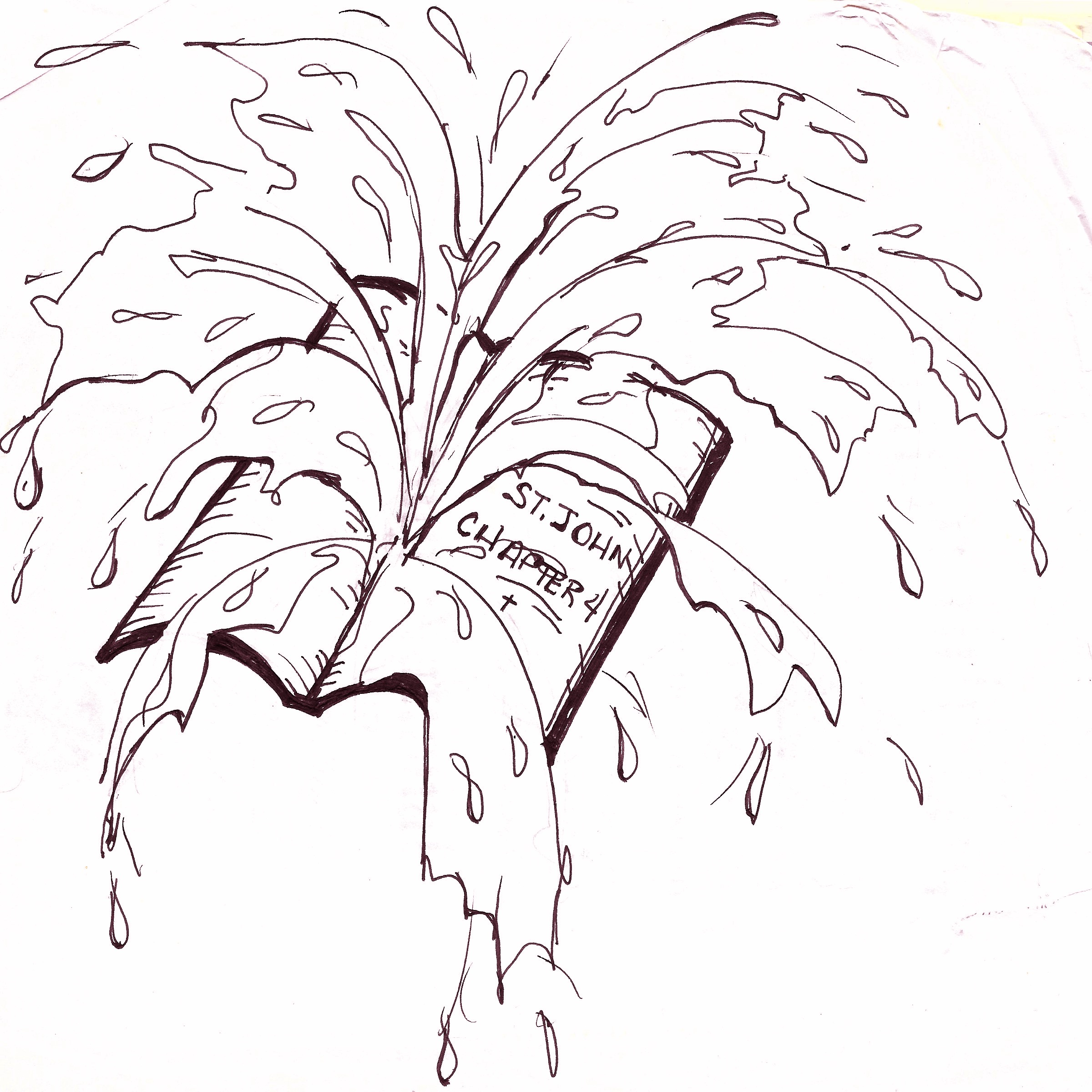
I go back often to Genesis 24 for the illustration and the figure in the Old Testament reminding us of the adornments of grace and beauty that will mark the believing Body of Christ.
Abraham sent his trusted servant to his former homeland to select a bride for Isaac. The adornment of Rebekah’s beauty consisted of jewels and the raiment that came as gifts of love from the bridegroom whom she had not yet seen.
It is a reminder of what God is doing in our midst right now. Abraham typifies God the Father; Isaac, our Lord Jesus Christ, the heavenly Bridegroom. The servant who went with the gifts into the far country to claim a bride for Isaac speaks well of the Holy Spirit, our Teacher and Comforter. He gives us, one by one, the gifts and the graces of the Holy Spirit that will be our real beauty in His sight. Thus we are being prepared, and when we meet our coming Lord and King, our adornment will be our God-given graces!
Though Pastor Tozer paints a simple word picture, it offers a depth to chew on for some hours. The entire chapter, Genesis 24, is a great read or re-read. Prayer. Trust. Love. Pastor Tozer shows how it illustrates the greatest love story of all—Jesus and His Beloved.
In an hour the Ambassador’s for Christ Amateur Radio net will begin. I’ve brought some lunch downstairs to my radio room, which is often called a “radio shack.” It’s comfortable here, now. As is my shop.
It has been occupied by me, and Jesus, long enough to feel peaceful. No doors. None required. Still feels peaceful. I sit with my back to the opening that could have a door. Yet it still feels peaceful. I thank our LORD for this time, this room, for His Peace.
Pastor Begg, through Truth for Life, has posted his daily devotions on the YouTube channel. I have his devotional book, but enjoy listening to his daily reading in my afternoon time on the deck, after the net. It’s a blessing to view the garden, the trees, to watch the birds at the feeders, the squirrels and their antics. I listen often to sermons by old- and new-generation preachers. It’s a time to learn, ponder, wonder.
This past week I’ve begun to consider the garden and GOD’s attention to it. I feel His Spirit in the beauty of the garden and know that through His watering and care it is what it is. There is GOD”s inescapable presence, His Peace.
This past week, too, I’ve reconsidered Tikkun Olam–the repair or restoration of the world. Not the secular world, the secular institutional world we are to actually be set apart from while existing within.
We are part of GOD’s created world, partially hidden to secular eyes, composed of all His creation. We see birds, squirrels, bees, trees, shrubs, in a new light, His Light. These are among His Splendor on Earth. We can find purpose in our own lives in our appreciation and thanksgiving of His Splendor, Splendor revealed to us in His Creation. We can feel a contribution to this present world as we get our hands a bit dirty in the soil of this His created Earth, one He created for His people.
I’ve been successful in a small “HOME AUTOMATION” project. Mail. As in U.S. Postal Service mail. The mailbox is on the street, as we have mail trucks delivering mail. My project created a device that senses that the mail box has been opened. The device then communicates that to the Home “HUB,” which in turn signals a lamp in the kitchen to turn on. When the mail is retrieved from the mailbox, which means it was opened a second time, the light is turned off, automatically. I found great Joy in this little project.
Oddly, I don’t like puzzles. Yet I do enjoy figuring out how to make something like opening a mailbox door turn on a light. I enjoy writing the computer code and connecting the various electronic devices together to make it work. It’s seeing a problem, even it’s just an invented problem, and finding a solution. Some projects I start and place to one side. I let them set for some time before going back to them. I suppose it’s like cooking or other crafts that need time to set. It’s also why the corporate/business world is a hard place for some people. Journalist’s are notorious for pondering, editing “the story” in their mind a thousand time, asking for the deadline to be extended, and finally, usually just in the nick of time, type the ### or a -30- at the bottom of the page signifying the “end of the story.”
Funny thought. GOD doesn’t have ### in His vocabulary. GOD doesn’t have a -30- in His plans for His creation. For Him, and for us through Yeshua, there is no end to the story. Our messed up lives will be the ultimate Tikkun, the ultimate everlasting restoration.
Alleluja! Praise GOD from Whom all blessings flow Praise Him all creatures here below Praise Him above, you heavenly host Praise Father, Son and Holy Ghost Amen!
“To the saints who are in Ephesus, and are faithful in Christ Jesus. . .” Ephesians 1:1
In a 1954 sermon, Saints and Faithful In Christ Jesus, Pastor Martin Lloyd-Jones began a series of sermons in Apostle Paul’s letter to the Church in Ephesus. He stating that he believes this letter was written to all Christian’s, not just the Ephesians church. As such, it is timeless, written to Christians of his day, and ours. Furthermore, Pastor Lloyd-Jones believed that the epistles were written to Christian’s only, and not evangelistic, as the Gospels and Acts.
The first key point from this sermon is that all Christians are Saints. Pastor Lloyd-Jones is clear that it is unscriptural, as is the Roman Catholic practice, to think of only certain individuals as Saints. He defines saint as holy, set-apart, cleansed from all sin and guilt, redeemed by Jesus Christ. Of course, as is the pastor’s style, he goes into great detail with scriptural citations.
Next, Pastor Lloyd-Jones goes into great detail to what it means for Christians to be faithful in Jesus Christ. He says that faith includes belief, for we are baptized in the Lord Jesus, baptized in Holy Spirit. Being a Christian is more than being not of “the world.” Christians are joined together in Christ. No longer children of Adam, but Children of GOD.
Faithful, according to Pastor Lloyd-Jones, also includes a strong defense of our faith, for Christians most know what they believe and why they believe it. Furthermore, we are tasked with standing firm in faith, being dependable, reliable. The pastor states the Christians are to “stand out.”
If interested, this sermon is found at mljtrust.org, sermon #4002 Saints and Faithful in Christ Jesus. Most of Pastor Martyn Lloyd-Jones’s sermons have been remastered and are available at no cost. An app is also available for mobile/portable listening.
For the customs of the peoples are worthless; they cut down a tree from the forest
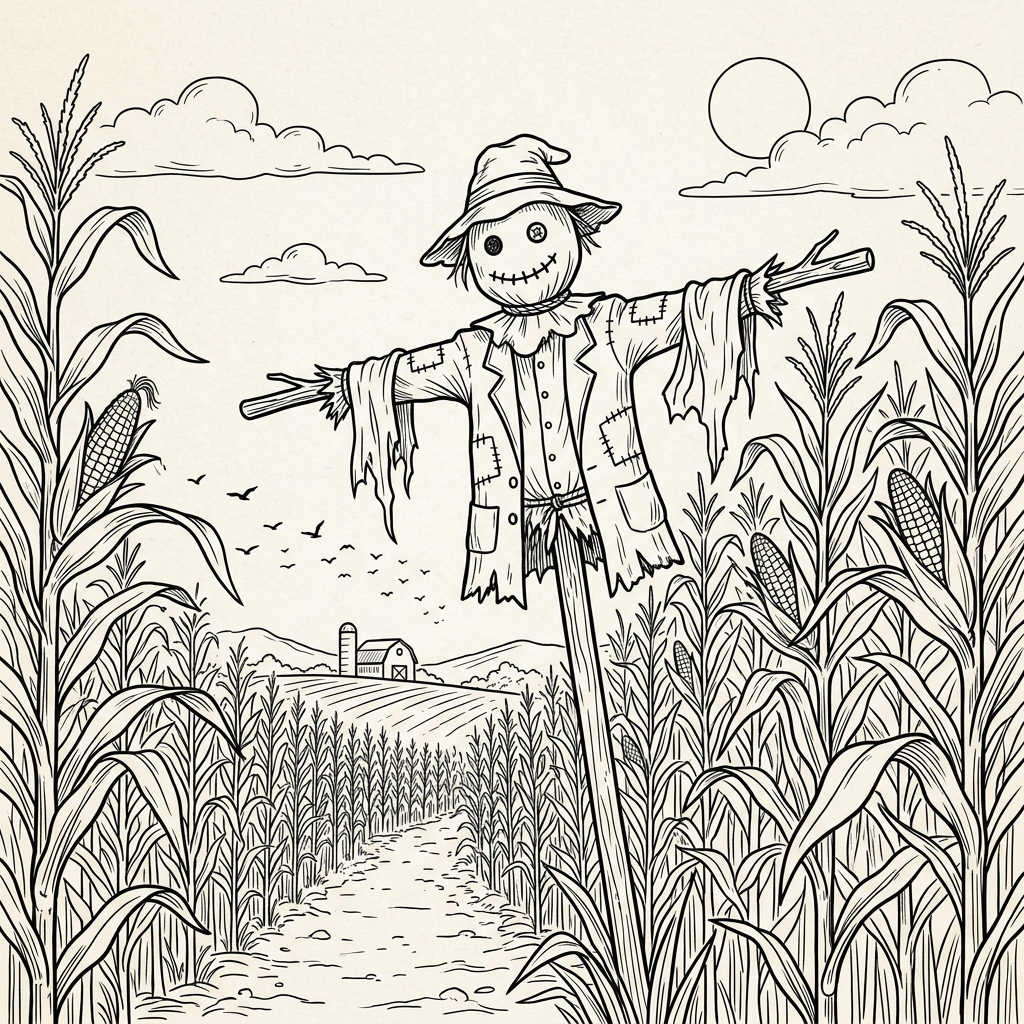
Like scarecrows in a cucumber patch, their idols cannot speak
Do not fear them, for they can do no harm, and neither can they do any good
Jeremiah 10:3,5
Wrapping up some things I’ve been thinking on from Jeremiah Chapter 10 .
In Jeremiah’s time, the nations, the pagans, had gods. The people made images of the gods. There were sacrifices made to their gods, even children literally murdered as sacrifices. These aren’t real gods. They are constructs of the people. Aren’t these gods demonically inspired? Don’t they encourage the acts of the people under their influence, immoral and corrupt acts that oppose the GOD of Israel?
The GOD of Israel is shown to be “King of the nations” (v7). Israel’s GOD, our GOD, is the GOD of the nations. He has displayed His Glory. He did so in Egypt. When Israelis are dragged off to Babylon, even its kings will recognize GOD as the GOD of all creation.
GOD, is not just a higher GOD, as supervisor sort of GOD over the national gods. Our GOD is the only GOD. The gods of the nations are like scarecrows in a field; we need not fear them.
Our GOD tells us through Jeremiah, “Do not be afraid of them, for they cannot do evil, neither is it in them to do good.” (v5) First, these images are not worth our fear. Fear GOD. Fear not humans and these fanciful imaginations created. Second, GOD says these objects cannot do evil. Impotent idols, powerless, in total contrast to Almighty GOD who possesses the All Power. Third, given that these objects are like a stick placed in a field covered with clothing to make it appealing, it can’t do any good.
My take away: There are many things of the world that appear dangerous and there’s a temptation to appeasement. The world also appears at one time evil and at another time quite good, even beneficial. The world and its idols are like pieces of wood destine for the fire pit.
Learn not the way of the nations, nor be dismayed at the signs of the heavens because the nations are dismayed at them, for the customs of the peoples are vanity. Jeremiah 10:2,3
GOD says not to learn the ways of the nations, the pagan ways.
Jeremiah chapter ten provided strict guidance for those taken to Babylon. Daniel, for instance, was young when taken as a captive. Jeremiah’s warning was to keep him, and the other exiles, from the Babylonian customs, especially religious practices. It was idolatry that brought upon Israel GOD’s judgement.
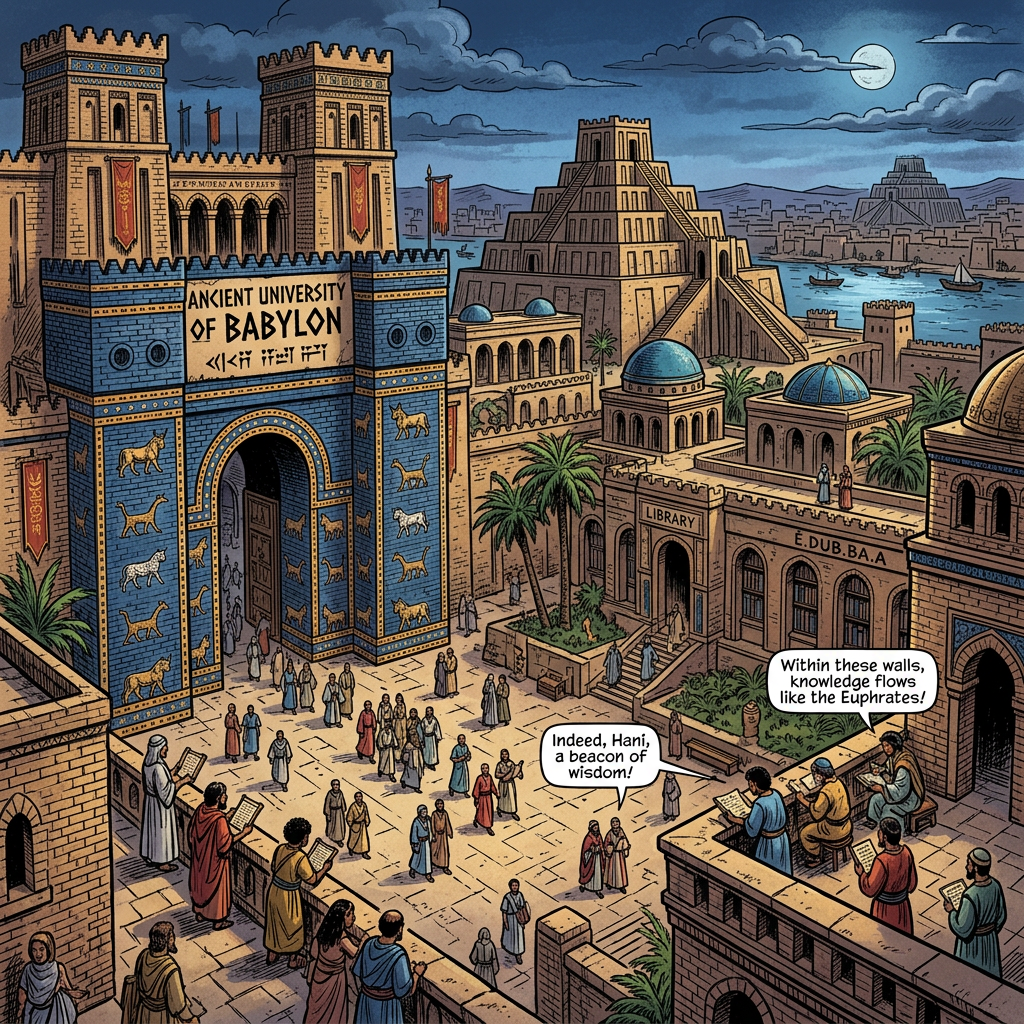
Once in the great city, Daniel and friends get a full ride to Babylon U. They receive new names. Not a big deal. Easier for the locals to pronounce. They would be taught the literature and language of the Chaldeans. Again, useful and not against the LORD’s commands. They were also to eat from the king’s table. Who could resist that. Surely the king’s BBQ ribs were known far and wide. “But Daniel resolved that he would not defile himself with the king’s food, or with the wine that he drank.” (Daniel 1:8)
It all worked out well for Daniel, however He got to travel around the country, worked in the king’s palace, helped out the king. He spent his life in daily prayer to GOD. The GOD of Abraham, Issac, Jacob. The GOD of Israel. He didn’t stop, either, even when the king ruled against it. That got him tossed in a cage with some fierce and hungry lions. But even that turned out nice again.
But what of the Gentiles, years later, came to believe in the Jewish Messiah, Jesus. And what of those today. What of those born in the nations, even nations that with religious freedom and churches and Christians. What of the children who grow up with non-believing parents. Most children today have teachers who aren’t Christians. They use a secular, non-Biblical, curriculum that prizes science, technology, politicians, social media influencers, news media as its gods.
How does one unlearn that?
It begins with a call by Spirit. It begins when a person is born again. The process of unlearning begins. New learning, new ways. Learning new ways of thinking. Learning new ways of behaving.
While there are 613 instructions given the first five books of the Bible, there are over twice that number of instructions beginning at the Book of Matthew and continuing on through the letters and writings of the Apostles. There are a lot of laws. We can’t unlearn enough. We can’t learn enough. We can’t become good enough to earn our way into an eternity with Jesus.
We can’t earn salvation. We simply can’t. But by Grace we are saved. Thank GOD for Jesus. Through His Cross. Through His Blood.
Born again, we begin to unlearn old, useless, empty ways. We begin to stride with Spirit to do what the Lord requires of us: to do justice, to love kindness, to walk humbly” with our GOD. (Micah 6:8)
“Learn not the way of the nations, nor be dismayed at the signs of the heavens because the nations are dismayed at them, for the customs of the peoples are vanity.” Jeremiah 10:2,3
Jeremiah speaks to Israel the Word of the GOD of Israel. He says not to learn the way of the nations (ESV). While other translations differ somewhat in wording, it’s clear GOD is saying not to follow the practices of “the nations.” Barnes’s Notes calls it the customs, ordinances, established institutions of the peoples of pagan nations. Mostly, translations and comments apply this warning to religion, rather than social, behaviors. [I wonder, though, if it is that limited. ]
The historical context: Jeremiah’s prophetic ministry came in the years before Jerusalem’s fall in 586 BC. The Land of Israel was on a major trade route, which made it a target for conquest. Babylon was on the rise as a nation. Assyria was still a power, though not as it had been. Worse, Israel was filled with idolatry. Kings such as Jehoiakim sought pagan alliances in an effort to maintain power. They weren’t following the GOD of Israel; they turned to the gods of the nations, the world.
GOD says these customs are vanity. Empty. Of no value.
At this same time that Jeremiah gave GOD’s warnings to Israel there must have been fearful sightings in the skies. I can’t help think of all the “apocalyptic” movies that begin with some catastrophe such as earthquakes, astroids, floods, or aliens. Wars and rumors of wars. Panic.
We are instructed, however, not to be dismayed at the panic of the nations. We must follow the way of the cross. Our salvation comes not through things of this world, but through Jesus.
Salt is good, but if the salt has lost its saltiness, how will you make it salty again? Have salt in yourselves, and be at peace with one another. Mark 9:50
Echinacea. It’s also known as coneflower. It’s GOD’s Swiss-army knife of herbal healing.
Jesus said we are the salt of the Earth. He could easily say we are the echinacea of the EARTH. For in Him, we can offer ourselves as a healing balm to all GOD’s creature.
There is a prerequisite for our use: our prayer life. As we reflect on Mark chapter 9, may we be inspired to live lives of faith, humility, and service, ever mindful of the glory and power of our Lord Jesus Christ.
Here are some takeaways from this chapter:
Praise God for His Glory;
Thank God for revealing His glory through Jesus and for the hope we have in Him;
Ask for Increased Faith;
Pray for a deeper, unwavering faith that trusts in God’s power and promises;
Seek Humility and Service;
Request a heart that seeks to serve others and reflects Christ’s humility;
Protection from Sin
LORD Bless, Keep, Shine. . .
Note: Prayer points based on Berean Bible Commentary, Mark 9.
Just as it was in the days of Noah, so will it be in the days of the Son of Man. They were eating and drinking and marrying and being given in marriage, until the day when Noah entered the ark, and the flood came and destroyed them all. (Luke 17: 26,27)
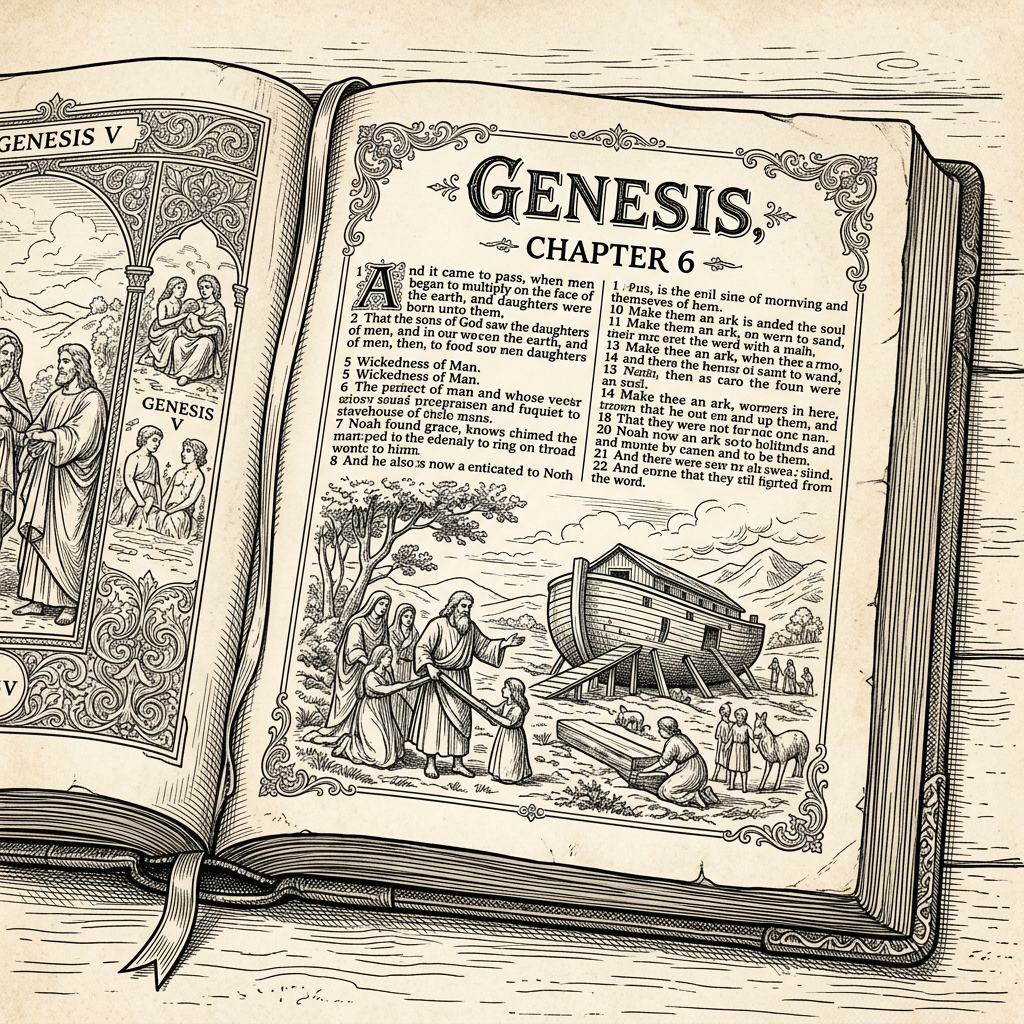
The Berean Bible commentary lists four points of prayer based on Genesis Six. Jesus said The Last Days would be like the Days of Noah. Whether or not these day are those days, the prayer points are applicable.
Pray for Personal Righteousness Ask God to help you live a life that is pleasing to Him, following the example of Noah.
Seek Forgiveness and Repentance Confess any areas of sin in your life and seek God’s forgiveness and strength to overcome them.
Intercede for the World Pray for the world to turn from wickedness and seek God’s mercy and grace.
Thank God for His Faithfulness Praise God for His unwavering faithfulness and the promises He has made to His people
Frustrated. Irritated. Must be the weather. I got up on the wrong side of the bed. I didn’t sleep well. I wandered around CostCo overloading a cart on the 6-week grocery trip. Traffic is crazy. I don’t like the way people drive, especially those from somewhere else. I want to go sit in the forest, alone. I. I. I. Yes, I know, life isn’t about me. Life happens. Deal with it. Yuke!
So I look through notes kept in Google Keep. I see one about 10,000 Reasons. I read the lyrics. Again. I think if I could get to the 10,000th reading or listening of this song I’d still choke up. Thank You, Jesus!
O LORD You’re rich in love and You′re slow to anger Your name is great and Your heart is king For all Your goodness, I will keep on singing Ten thousand reasons for my heart to find
10,000 Reasons (Bless The Lord) from Maranatha! Music Writers: Matthew James Redman, Jonas Myrin
chorus Bless the Lord, O my soul O my soul, worship His holy name Sing like never before, O my soul I′ll worship Your holy name
verse The sun comes up, it’s a new day dawning It′s time to sing Your song again Whatever may pass and whatever lies before me Let me be singing when the evening comes
verse You’re rich in love and You′re slow to anger Your name is great and Your heart is king For all Your goodness, I will keep on singing Ten thousand reasons for my heart to find
chorus
Bless the Lord, O my soul O my soul, worship His holy name Sing like never before, Omy soul I′ll worship Your holy name
Bless the Lord, O my soul Sing like never before, O my soul I’ll worship Your holy name