It doesn’t look good for the people of Earth these days. While we’ve weathered many storms, it seems we are in the midst of the Perfect Storm. Are we facing a second wave of of Corona Virus? Many countries are failing economically. Some are saying America is facing a another civil war, or at least a Constitutional Crisis.
How do we prepare?
Chip Ingram, in his Coffee Break series, compares these tribulations to those of the First Century. His short teaching is here: In Crisis and Uncertainty.
In other relevant “old news,” take a quick tour through Haggai, Ezra, Nehemiah. A remnant of Israelis returned to Jerusalem from exile in Babylon. Despite full support from Babylonian kings, they experienced opposition, to put it mildly, to their presence.
After many starts and stops, they rebuilt their homes, The Temple, and the walls around Jerusalem. Yet opposition continued. The gates to Jerusalem were destroyed. The people gave up hope.
When Nehemiah, still in Babylon as a wine steward to the king, heard, he sought permission to go to his people.
Nehemiah, accompanied by others, returned to embolden the other returned Israelis to rebuild the gates despite threats of war. When they had done so, they looked into the Law and discovered the command to celebrate The Feast of Succoth, (Nehemiah 8:13) which is also know as The Feast of Tabernacles, or The Feast.
Tonight begins The Feast. Yeshua celebrated The Feast, too, (John 7 through 9). Here’s an article by the International Christian Embassy Jerusalem:
Basilica of Saint Francis of Assisi all photos by Wil Robinson, 1986
We met in San Luis Obispo, a city on California’s Central Coast. I don’t recall his name. He worked at a small used book store on the main downtown street.
He was enamored by Francis, as he was at the thought of the cloistered life.
We talked about that, and how he thought he’d be a perfect monk, that the lifestyle would suit him.
It was his best friend who dissuaded him from this endeavor. He told him he should make the world his monastery.
We also talked about Francis.
Another view of the Basilica
When I think of Francis of Assisi, I think of a hippie preacher. He’s often thought of as a New Ager, though, as “He preached: ‘Your God is of your flesh, He lives in your nearest neighbor, in every man.’ ” (Wikipedia)
Francis is also known for his Canticle of the Creatures, in which he calls the sun brother and the moon sister. And “around 1220, Francis celebrated Christmas by setting up the first known Nativity scene).”
Francis’s early years as the son of a wealthy business man were ones of high-spirited excess. “He was handsome, witty, gallant, and delighted in fine clothes. He spent money lavishly.” (Wikipedia)
Despite what can be thought of Francis, he stepped out of his comfort zone and into a life of poverty.
I suppose the fellow from the bookstore wanted to emulate Francis. Perhaps making the world his monastery is a way to step out of the comfort zone.
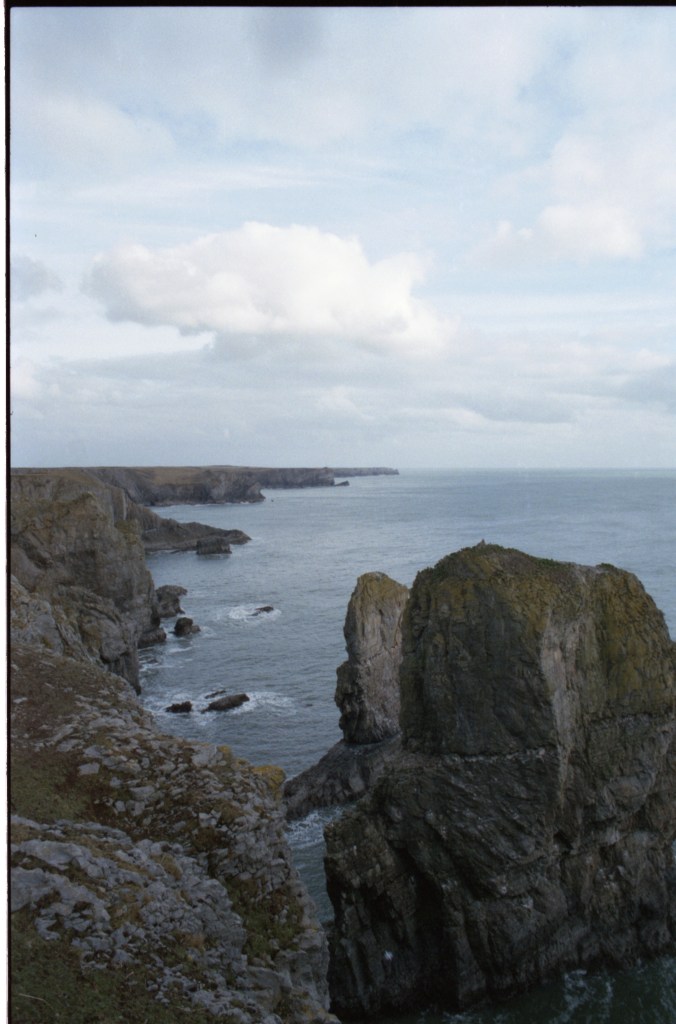
St. Catherine’s Island, Tenby, South Wales. The fort, built during the Napoleonic War, was once converted to a royal palace, and later into a Zoo. It now sits desolate. As a child, at low tide, I remember walking out to the island. Photo by Wil Robinson
This week we’ll explore the final vow of the Celtic Vow of Friendship we’ve been looking into these past few weeks. The scripture for today sets the stage for this exploration. We’re familiar with the setting. Our Lord has died, resurrected, and is about to again appear to His disciples. Peter has set out to go fishing. Is he still beating himself up over his denial of Messiah? Is he feeling useless in ministry, unsure how to proceed? His Lord is dead. He denied Him. So he goes back to work doing what he knows how to do.
“Simon Peter said to them, ‘I am going fishing.’ They said to him, ‘We will go with you.’ They went out and got into the boat, but that night they caught nothing.”
John 21:3
As an aside, I noticed something in this scripture: “but that night they caught nothing.” It just isn’t going to work. Peter had chosen to follow Y’shuaJesus, and isn’t going to be let of the hook so easily. Feeling sorry for himself or not, feeling guilty or not, Y’shuaJesus called him and that is the only way he’s going to be allowed to go.
Notice how Y’shua approaches Peter and the others. “ ‘Children, do you have any fish?’ They answered him, ‘No.’ He said to them, ‘Cast the net on the right side of the boat, and you will find some.’ So they cast it, and now they were not able to haul it in, because of the quantity of fish.” (John 21:5-6 ESV)
How awesome is our G-d! How wonderful is our true Friend! Y’shuaJesus is not subject to disappointment. Rather he simply asks Peter and the others if their work is actually working. Then he tells them how to accomplish that work.
In the Celtic vow “I am not subject to disappointment,” notice that it doesn’t merely say “I am not disappointed.” Being subject to disappointment is like being held captive, hostage, to disappointment. Disappointment is a condition of feeling disappointed. If I am subject to a condition of feeling disappointed, I’ll always feel disappointed. It isn’t just about being disappointed in something that has occurred, it is a mindset of being disappointed in future interactions. Y’shuaJesus is not subject to this condition. And neither ought we be held hostage to feelings. We have elements of inhumanity within us, a condition of the “fall.” So we acknowledge improper feelings, confessing them, and then we need get over them before we approach our friends, and even our enemies.
Look at what comes next in what some consider Peter’s restoration, Y’shuaJesus calls the disciples to breakfast. How marvelous. No recrimination. Just an offer of a meal. After the meal Y’shuaJesus asks Peter if he loves Him more than these. These? These men, friends of SimonPeter? These fish, the boats, the gear? Perhaps both the men and the fishing industry to which they’d returned. Peter says yes, he loves the Lord. Three times this occurs and each time Y’shua’s response is to get going, do the work prepared for him: Feed Y’shuaJesus’s sheep.
Father G-d, You redeemed us by the sacrifice of Your Son Y’shuaJesus, we have been purchased to do Your will by the power of Your Holy Spirit dwelling within us. Just as You have put aside our failures, and accepted us, enable us to not be subject to disappointment in our relations with others. In the Name of Y’shuaJesus. Amen.
St. David’s Cathedral, Wales, sits on the site of the monastery founded by St. David in the 6th Century. Services have been held on this site since then. Though the various chapels have many times been destroyed, they have been rebuilt. Photo by Wil Robinson
Continuing with another vow from a Celtic Vow of Friendship, “I will no Negotiate by Withholding.” Let’s start with negotiate, defined as (1) to transact business; to treat with another respecting purchase and sale; to hold intercourse in bargaining or trade, either in person or by a broker or substitute; as, to negotiate with a man for the purchase of goods or a farm; and (2) to hold intercourse with another respecting a treaty, league, or convention; to treat with respecting peace or commerce.
“Finally, brothers, rejoice. Aim for restoration, comfort one another, agree with one another, live in peace; and the God of love and peace will be with you.”
2 Corinthians 13:11
So negotiate is to talk, discuss, agree, confer, and bargain; it is also to get past, which is cope with or deal with.
In order to dwell together peacefully and have the G-d of love and peace with us, Paul wrote: “Aim for restoration, comfort one another, agree with one another. . .” (2Cor 13:11)
In a friendship, we must agree with each other. If I look at another more highly than myself, then I respect his or her desires. This might require getting past some of my own cherished outcomes, as we looked at previously. Perhaps I don’t want to give up a particular desire, rather I want another to agree with me, to get past his or her own desires. We negotiate, whether in the open or clandestine.
This might be openly displayed in the discourse of a parent trying to coerce a child to do what he or she wants. “If you don’t (do this or that) then (this or that will occur),” might be said. Friends negotiate by taking turns doing things together, each having his or her choice recognized.
Another, more clandestine, way to sway another into agreeing with me is by emotional and physical withholding. It is a refusal to give, to hold back, or to deny. This is done in marriages, addressed by Paul in his letter to the Corinthians. “The husband should give to his wife her conjugal rights, and likewise the wife to her husband.” (1 Corinthians 7:3 ESV)
We can withhold affection outside of marriage too. We can withdraw emotionally from a friend when we disagree, rather than attempting to agree, even if it means agreeing that there is a disagreement. In this case, I think it means that each acknowledges the other’s right to hold a particular opinion, and that the friendship can continue without one having to relinquish his or her position.
Consider, now, another aspect of withholding that is done simply to agree with a person. We can withhold our beliefs and truth simply to make peace. Y’shuaJesus warned us that “. . . whoever denies me before men, I also will deny before my Father who is in heaven.” (Matthew 10:33 ESV) We are taught to “. . . put away falsehood, let each one of you speak the truth with his neighbor, for we are members one of another.” (Ephesians 4:25 ESV)
This vow of friendship, with its Biblical roots, helps us consider wisely our ways as we participate socially with both saved and unsaved people. We are encouraged to not withhold ourselves to simply get our way, and not to withhold our selves in fear of upsetting some illusive peace.
Lord, help us be discerning in our speech and actions, always mindful to glorify You in our human relations. Amen.
Continuing with the Celtic Vow of Friendship, let’s look at “I hold no cherished outcomes.” Why not? one might ask. Should we not have at least the cherished outcome of seeing all people saved, seeking the opportunity to speak our mind and heart about our Lord. Jeremiah wrote: “If I say, ‘I will not mention him, or speak any more in his name,’ there is in my heart as it were a burning fire shut up in my bones, and I am weary with holding it in, and I cannot.”
“Do nothing from rivalry or conceit, but in humility count others more significant than yourselves.”
Philippians 2:3
Then again, it is not us that affect salvation. Charles Spurgeon wrote: “Salvation is the work of God. It is he alone who quickens the soul ‘dead in trespasses and sins,’ and it is he also who maintains the soul in its spiritual life.” Our responsibility is to respond to our Lord through His indwelling Spirit. We approach others without our own agenda, without a cherished outcome that we, in our flesh, might impose upon another.
We do this by maintaining a proper perspective. We: love G-d, yielding in dependence and submission; delight ourselves in Him (Ps 37:4,5); and love others, looking toward their interests (Phil 2:3) rather than only our own. This perspective yields contentment, as we no longer look to this temporal world, but seek Eternal blessings.
A sign of maintaining an Eternal perspective is Gratitude (Phil 4:11), which is being thankful for our circumstances, our possessions, and the people we encounter. We then are able to look forward (2Cor 4:18), beyond what is seen, toward the unseen. We become grounded, continuing to study The Word, developing our agility with the Sword of the Spirit. We also maintain our prayer life, and continue in fellowship with other Christians.
In all this, we live well, deny ungodliness and worldly lust, live soberly and righteously, godly in this present age as we look to the blessed hope and glorious appearance of our great G-d and Savior Y’shuaJesus The Messiah. (Titus 2:12,13) We follow advice found in the Billy Graham Training Center Bible
“No matter what happens in your life, if you seek to live in G-d’s Will, He will grant you an understanding of His perspective to help you through your pain, fear, stress, suffering, or persecution.”
Finally, as we develop this proper perspective, this Eternal perspective, we begin trusting G-d, seeing and perceiving that truly He meets all our actual needs. Then we are free then to consider the needs of others, to look at others as more significant than us. We are able to be a friend and extend ourselves to others in the Name of our Lord and Savior, Y’shuaJesus.
Help us, Oh Lord, to hold not our own cherished outcomes in our relationship with You and also in our relationships with others. Grant us the talent of seeing others as more significant than ourselves, seeing other’s needs as greater than ours, and grant us a proper perspective that we might truly live well. AMEN.
The recent topic has been friendship based upon a Celtic Vow of Friendship. In the last column we began looking at “I bring an unprotected heart to our meeting place.” We examined an unprotected heart. Today, let us think about “our meeting place,” and those meeting places as divinely ordained and inspired.
“[Abraham] lifted up his eyes and looked, and behold, three men were standing in front of him. When he saw them, he ran from the tent door to meet them and bowed himself to the earth.”
Genesis 18:2
In the scripture today the LORD appeared to Abraham by the oaks of Mamre. Abraham recognized a holy encounter was taking place and responded appropriately by running to the meeting place and bowing to our Lord. Of this encounter, Charles Spurgeon wrote: “God graciously visits those in whom he has first raised the expectation of him, and manifests himself to those that wait for him.” Abraham might have been awaiting the opportunity to do good to any stranger that came by, not having hotels or inns in which they might stay. The writer of the letter to the Hebrews might well have been thinking of Abraham’s meeting place with G-d when he wrote: “Do not neglect to show hospitality to strangers, for thereby some have entertained angels unawares.” (Hebrews 13:2 ESV)
We can see this principle played out in Y’shuaJesus’s encounter with the apostles on the shores of Lake Kinneret (John 21:1), with disciples on the road to Emmaus (Luke 24:13), and with Saul/Paul on the road to Damascus (Acts 9:3). Thus, this principle is that G-d chooses to meet us where we are, and chooses to have us meet others if we are open to Him.
Charles Spurgeon encourages us to look expectantly for opportunities. “Religion does not destroy, but improve, good manners, and teaches us to honour all men. Decent civility is a great ornament to piety. [Abraham] was very earnest and importunate for [the angel’s] stay, and took it as a great favour. It becomes those whom God has blessed with plenty to be liberal and open-hearted in their entertainments, according to their ability, and (not in compliment, but cordially) to bid their friends welcome. We should take a pleasure in showing kindness to any; for both God and man love a cheerful giver.”
We can discover another principle of meeting places in the events leading up to Elijah’s encounter with G-d on top of Mt. Horab told in 1Kings 19. Elijah’s discouragement after Jezebel’s threats propelled him to the wilderness where he wanted to die. But the Lord sent an angel to assist him and direct him. “And the angel of the LORD came again a second time and touched him and said, ‘Arise and eat, for the journey is too great for you.’” (Kings 19:7 ESV) Once at Mt. Horab, Elijah is directed out of a hiding place, into an encounter with G-d. Thus, this principle is that G-d brings to us those He chooses to direct us to encounters with Him.
In each of these encounters, these meeting places with G-d, is the critical element of an open, unprotected heart. Abraham extended himself, looking beyond his immediate self, to entertain strangers. Elijah, fleeing to the desert wanting to die, remained open to the Lord’s guidance and assistance from an angel.
This week as the Lord allowed me to see various meeting places in scripture, He also led me to see some of the results of these meeting places. In Acts 16, Luke tells us that Paul was prevented from going to Asia, and directed to go instead to Macedonia (v 10). Luke also tells us (Acts 8) of Philip being directed into the desert where he encounters, and the Lord saves, an Ethiopian court official. Thus, another principle of meeting places is that the Kingdom of G-d is enlarged.
Are all meeting places holy and ordained? Check out the report in Judges 16 of Samson’s meetings with Delilah. This is a case in which Samson’s heart should have been greatly protected, for opening it to Delilah had grave consequences.
Oh, Lord, most merciful and holy, grant us appropriately to open our hearts to encounter You and do all You desire. Grant us the wisdom to guard our hearts appropriately, too. Grant us peace in our journey with You. Amen.
Entrance to the walled city of Tenby, South Wales. My father said the English built the walls to keep the Welsh out. Photo by Wil Robinson
Today let’s speak only about having an unprotected heart, reserving ‘meeting place’ for next time.
“Put no trust in a neighbor; have no confidence in a friend; guard the doors of your mouth from her who lies in your arms. . .”
Micah 7:5
I understand an unprotected heart as being exposed, even vulnerable, to others. How can this be? How can we possibly open our hearts? This contradicts the teaching to guard one’s heart that I’ve heard in the last few years. Even Micah lamented that in a wicked and perverse world there is to be no trust, no exposure. He looked critically, rationally, at the world around him, at the loss of the godly, at the rise evil, and admonishes to trust no one, for no one is righteous.
In my last column, I spoke of treating even enemies as friends. We are to let our actions speak sermons, to encourage those who are in need of G-d’s salvation, to treat all as friends. This means we speak the truth that is within us. This means we expose ourselves to others. We come to people with an unprotected heart. Really? Are we truly to do so, in an evil world? Should we not guard our hearts. Yet, despite the evil in the world, John wrote “But if anyone has the world’s goods and sees his brother in need, yet closes his heart against him, how does God’s love abide in him?” (1 John 3:17 ESV)
A protected heart lowers its walls, exposing ourselves to another person. From out of the heart, as Y’shuaJesus said, pour rivers of living water (John 7:38) to nourish a thirsty–even if evil–world. We are to walk blamelessly and do what is right and speak truth from our hearts. (Psalms 15:2 ESV) And perhaps you will say you’ve opened yourself and now feel that reproaches have broken your heart so that you are in despair. You’d like some pity but no one provides. You’d like a person to comfort you, but find none. (Psalms 69:20 ESV)
Y’shua knew we would face difficult times in an evil world. He said, “Go your way; behold, I am sending you out as lambs in the midst of wolves.” (Luke 10:3 ESV) Paul admonished us to “. . .not be anxious about anything, but in everything by prayer and supplication with thanksgiving let your requests be made known to God. And the peace of God, which surpasses all understanding, will guard your hearts and your minds in Christ Jesus.” (Philippians 4:6-7 ESV)
When we are willing to love, to expose ourselves, we act as our Lord who was willing to suffer to reach those that He may. And we are rewarded in our suffering. In our suffering we become more like our Lord. “The sacrifices of God are a broken spirit; a broken and contrite heart, O God, you will not despise.” (Psalms 51:17 ESV)
We let the Holy Spirit guard our hearts in His wise way. Micah realized that among people there is no help, no righteous fellowship, yet boldly states: “But as for me, I will look to the LORD: I will wait for the G-d of my salvation; My G-d will hear me” (v7). Let us go forth today, boldly trusting in our G-d, in the salvation we have though His Son Y’shuaJesus, through the power of His Holy Spirit. Let us be willing to open ourselves as led by the Spirit, willingly risking rejection and reproach. Let us rest in the Lord and in His peace.
Thanks be to G-d, who guards our hearts with His Peace. He spoke though his psalmist, telling us even if an army attacks us, our hearts should not fear; though war come against us, we may be confident. (Psalms 27:3 ESV)
Furthermore, we are encouraged to be like the psalmist who says to our G-d, “I have not hidden your deliverance within my heart; I have spoken of your faithfulness and your salvation; I have not concealed your steadfast love and your faithfulness from the great congregation. (Psalms 40:10 ESV) Praise be to G-d, our strength and our shield. Amen.
“All these, who were chosen as gatekeepers at the thresholds, were 212. They were enrolled by genealogies in their villages. David and Samuel the seer established them in their office of trust. So they and their sons were in charge of the gates of the house of the LORD, that is, the house of the tent, as guards.” 1 Chronicles 9:22-23 ESV
Note: Originally posted 2012
Trust. Those chosen to guard the house of the tent were trusted men. To be a friend to someone or chose a friend, this friendship must include trust. Last week I shared a Celtic vow of friendship. The second vow is “I drink from your well.” When we drink of another’s well, we trust that person with our lives. This is true, too, of our well, the well we share. We must be trustworthy for we hold that person’s very life in ours.
There are many elements in this vow of trust. In Acts 15:36-41 Paul and Barnabas disagree over taking Mark on the next journey. “. . .a sharp disagreement, so that they separated from each other. Barnabas took Mark with him and sailed away to Cyprus. . .” (Acts 15:39 ESV). Barnabas supported, sided with, Mark and willingly separated himself from Paul. A friend supports a friend, provides opportunities for a friend to make up for failures. A friend believes in a friend.
Another element of drinking from a friend’s well is suffering, or at least being willing to suffer, with a friend. When Y’shuaJesus announced his desire to journey to Jerusalem, Thomas passed a test of friendship when he said “Let us also go, that we may die with him” (John 11:16 ESV). To truly be a friend means a willingness to walk a friends walk with him. It is a willingness to suffer for a friend if called.
We are called to be a friend to those whom we don’t know. When we have little to give, we give what we can. We share our well as Peter did. “I have no silver and gold, but what I do have I give to you. In the name of Jesus Christ of Nazareth, rise up and walk!”(Acts 3:6 ESV)
We are taught to do good to our enemies, to befriend our enemy. Wonderful things happen when we follow this way of friendship. In Acts 16:25-30 Paul and Silas are in prison when an earthquake struck and “all the doors were opened, and everyone’s bonds were unfastened. When the jailer woke and saw that the prison doors were open, he drew his sword and was about to kill himself, supposing that the prisoners had escaped.” Paul did not run, did not take the opportunity for freedom. Rather he called to the jailer “Do not harm yourself, for we are all here.” The outcome of this selfless action on Paul’s part is that the jailer fell down before Paul and Silas and said, “Sirs, what must I do to be saved?”
Thank You, LORD, for Your Word, written through Your breath, preserved for us through the thousands of years. Continue to give us insight through it, that we might learn, that we may be transformed, that we may live Your promised abundant life. AMEN.
“The friendship of the LORD is for those who fear him, and he makes known to them his covenant.” (Psalms 25:14 ESV)
Note: Originally posted at JonahzSong in 2012
A friend and fellow minister/writer wrote about the importance of traveling life with friends and the great friend we have in our Lord, who is always with those who will look to Him. As I thought about friendship, I thought about my responsibility toward the Lord and toward His people.
There are a number of ways we can be a friend to our Lord Y’shuaJesus. Among them are these ways: Seek G-d’s truth and direction daily; Maintain a humble and submissive attitude; Remain always fully Committed; Give thanks in all circumstances; Be morally upright; and Seek G-d’s council.
Likewise, there are many ways to be a friend to others. Among them are to love: At all times (Proverbs 17:17); Without hypocrisy; In honor giving preference to one another, (Romans 12:9, 10). Additionally, we are friend to others as Paul tells us. We are to “owe no one anything except to love one another, for he how loves
another has fulfilled the law, (Romans 13:8). He also tells up that we are to “receive one who is weak in the faith, but not dispute over doubtful things, (Romans 14:1).
I see in “The Celtic Vow of Friendship,” essential ingredients for our journey as a
Messiah’s friend. These are from a poster my wife once had posted on our bedroom wall:
I honor your path
I drink from your well
I bring an unprotected heart to our meeting place
I hold no cherished outcome
I will not negotiate by withholding
I am not subject to disappointment
Let me address, today, the first, “I honor your path.” What does it mean to honor another’s path? The following illustrates one way.
“While we were staying for many days, a prophet named Agabus came down from Judea. And coming to us, he took Paul’s belt and bound his own feet and hands and said, “Thus says the Holy Spirit, ‘This is how the Jews at Jerusalem will bind the man who owns this belt and deliver him into the hands of the Gentiles.’” When we heard this, we and the people there urged him not to go up to Jerusalem. Then Paul answered, “What are you doing, weeping and breaking my heart? For I am ready not only to be imprisoned but even to die in Jerusalem for the name of the Lord Jesus.” And since he would not be persuaded, we ceased and said, “Let the will of the Lord be done.” (Acts 21:10-15 ESV)
In this discussion, the people of Caesarea are disagreeing with Paul’s path—Paul’s journey to Jerusalem. Paul explains his desire to follow Y’shuaJesus to Jerusalem. Even if the people would prefer that Paul did not go, they consent, they honor Paul’s path, saying, “Let the will of the Lord be done.” I see this as a lovely display of friendship.
May our Lord grant us the wisdom to walk the path of friendship, and to understand the cost of friendship paid by our Lord in His path to Calvary.
This split image shows the difference between an active Sun during solar maximum (on the left, captured in April 2014) and a quiet Sun during solar minimum (on the right, captured in December 2019). December 2019 marks the beginning of Solar Cycle 25, and the Sun’s activity will once again ramp up until solar maximum, predicted for 2025.
Credits: NASA/SDO
“Solar Cycle 25 has begun. During a media event on Tuesday, experts from NASA and the National Oceanic and Atmospheric Administration (NOAA) discussed their analysis and predictions about the new solar cycle – and how the coming upswing in space weather will impact our lives and technology on Earth, as well as astronauts in space.” — NASA
While people might think of some negative impact or other, to Amateur Radio Operators it’s a good thing. The greater the number of sunspots, the better radio waves propagate in the High Frequency (HF) bands.
The sunspot maximum is predicted for July 2025, according to the Press Release.
Page Two
It was during the minimum sunspot activity of Solar Cycle 21 that I was licensed by the Federal Communications Commission (FCC) and given the call sign N6BVZ. While learning Morse Code for the exam, I built a low-power transceiver—a HeathKit HW-8. I set up a vertical antenna on top of my trailer. I listened a lot as I waited.
When my license came in the mail, I got on the air. I had no idea the bands were not suppose to be good, that it would be hard to make any contacts. I tuned around on a band that had some noise on it, indicating that some activity might be present.
Finally the moment came. A fellow in Texas was sending CQ (which is an invitation to anyone to answer and “talk.” Talk meant using Morse Code and a key to send dits and dots. My speed then was about 5+ words per minute.
I didn’t hesitate to send my call. I heard him reply with my call. He’d heard me. The signal was a bit off from where I was tuned, and I started to retune as I readied to reply. Calamity! I managed to slip and push the dial way off. I tried to get back to the spot, but couldn’t find him again.
After a bit I found another station calling CQ, answered, and we had a short QSO (conversation or contact). Despite my initial blunder, I got off to a pretty good start, making a lot of contacts over the next few years.
Eventually the Solar Cycle got really good, as it hit maximum. I made contacts in Europe and even Australia, as well as all over the United States.
Those first years were my best years in Ham Radio (a nickname for Amateur Radio).