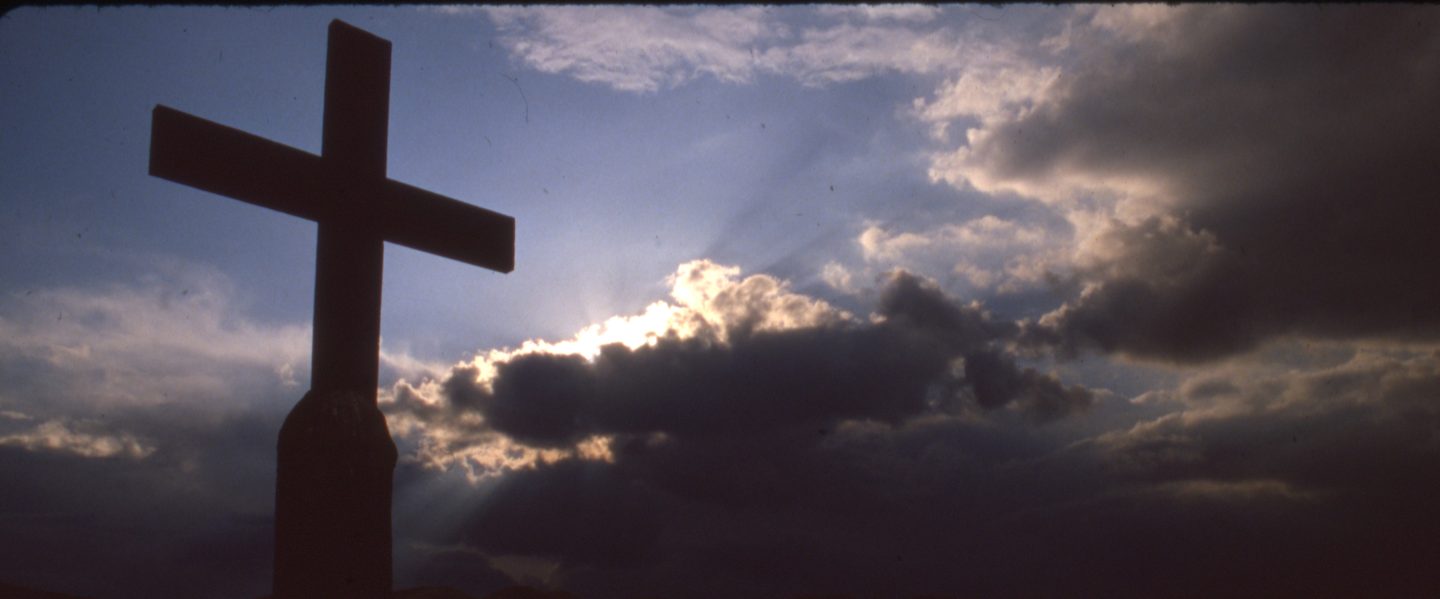
Faith and James T. Orwell

Apologetics is “reasoned arguments or writings in justification of something, typically a theory or religious doctrine.” —Google Dictionary

One of the most influential Christians and apologist for Christian Faith was C. S. Lewis.

Clive Staples Lewis (1898–1963) was one of the intellectual giants of the twentieth century and arguably one of the most influential writers of his day. He was a Fellow and Tutor in English Literature at Oxford University until 1954, when he was unanimously elected to the Chair of Medieval and Renaissance Literature at Cambridge University, a position he held until his retirement.

“Lewis wrote more than thirty books, allowing him to reach a vast audience, and his works continue to attract thousands of new readers every year. C. S. Lewis’s most distinguished and popular accomplishments include Mere Christianity, Out of the Silent Planet, The Great Divorce, The Screwtape Letters, and the universally acknowledged classics in The Chronicles of Narnia. To date, the Narnia books have sold over 100 million copies and been transformed into three major motion pictures.”

John Ronald Reuel Tolkien is better known to us as J. R. R. Tolkien. Another literary and intellectual giant, his devout Christian faith was a significant factor in the conversion of C. S. Lewis. I read somewhere that while Mr. Tolkien denied writing Hobbit and Lord of the Rings trilogy as a Biblical allegory, it most certainly is steeped with it, as it came from the heart of a man well-versed in the Bible.

Stephen Hawking, another writer and intellectual, who was also a scientist, is not a Christian, however, yet a voice for atheism.

“British theoretical physicist Stephen Hawking schmoozed with popes during his lifetime, even though he was an avowed atheist. The famous scientist, who died Wednesday in England at 76, was often asked to explain his views on faith and God. During interviews, he explained his belief that there was no need for a creator.

“He said during an interview with El Mundo in 2014: “Before we understand science, it is natural to believe that God created the universe. But now science offers a more convincing explanation. What I meant by ‘we would know the mind of God’ is, we would know everything that God would know, if there were a God, which there isn’t. I’m an atheist.”” (source: WaPo)

Interesting, “science offers a more convincing explanation.” He didn’t prove that G-D doesn’t exist. He didn’t try to do so. He simple believes another explanation for life. That’s his faith. Science.

And that’s the point, isn’t it? Faith. The New Testament writer of “Hebrews” (chapter 11 verse 1) wrote:


“Now faith is the assurance of things hoped for, the conviction of things not seen.”


Interesting, also, is that a Google search on “There is no god” produces 1.5 billion results in less than a second. It seems there are a lot of folks these days involved in atheist apologetics. In a search for Christian writers, I noticed a few articles attempting to explain why there are so few Christian writers these days. While Nan writing on her blog, Nan’s Notebook, and others who commented on her blog post seem to welcome dialog with Christians, I think many people do not.

While the WordPress community is an exception, there is no lack of nasty, harsh, and often bigoted comments on various forums I’ve read. And then there are the talk show hosts, such as one who said, in essence, that Believers belong in Bellevue, an infamous psychiatric hospital in New York City. One of the worst comments was one in which a person hoped all Christians would die. And while America isn’t as inhospitable to Jewish people, there is still an undercurrent of antisemitism that exists here. People of the Bible, their views and even their presence, isn’t all that welcome in this Post Modern society we’ve created based upon science (I’d like to say science fiction, but don’t wish to offend).

Christian churches have a lot of explaining to do, in my not-so-humble opinion, however. I think many who call themselves atheists have been desperately hurt in churches, and now are filled with anger and resentment toward all who would express their faith the G-D of Israel, Blessed be His Name.

Furthermore, Psychologists and councilors tell us we are inherently good, while the Bible points out our inhumanness, our failure, our worthlessness without G-D. It is difficult to reconcile the two views.

“The thief comes only to steal and kill and destroy. I came that they may have life and have it abundantly,” said YeshuaJesus. (John 10:10) And yet YeshuaJesus taught in parables. To understand the Bible, to understand a Faith in a Creator, one must seek. Wisdom is like hidden nuggets, and we must be prospectors. We have to dig. We also must ask the same G-D we have trouble even believing in.

At Speakers Corner, in London’s Hyde Park, I once asked a Christian, who’d testified to his faith in G-D, about a particular vociferous heckler. He told me that the man came regularly to listen and to heckle. This preacher said he welcomed that man, openly. He comes to heckle, but he is searching

“Now Thomas, one of the twelve, called the Twin, was not with them when Jesus came. So the other disciples told him, “We have seen the Lord.” But he said to them, “Unless I see in his hands the mark of the nails, and place my finger into the mark of the nails, and place my hand into his side, I will never believe.”

“Eight days later, his disciples were inside again, and Thomas was with them. Although the doors were locked, Jesus came and stood among them and said, “Peace be with you.” Then he said to Thomas, “Put your finger here, and see my hands; and put out your hand, and place it in my side. Do not disbelieve, but believe.” Thomas answered him, “My Lord and my God!” Jesus said to him, “Have you believed because you have seen me? Blessed are those who have not seen and yet have believed.” (John 20:24-29; emphasis added)

James T. Orwell. He was born the year Mr. Lewis died.  But I’ll need to wait for another day to share Mr. Orwell’s identity.

For now, I leave you with these thoughts from the Psalms, which is today’s selection on Daily Tehillim.

“Why do the nations ragea
and the peoples plot in vain?
The kings of the earth set themselves,
and the rulers take counsel together,
against the LORD and against his Anointed, saying,
“Let us burst their bonds apart
and cast away their cords from us.”

“He who sits in the heavens laughs;
the Lord holds them in derision.
Then he will speak to them in his wrath,
and terrify them in his fury, saying,
“As for me, I have set my King
on Zion, my holy hill.” ”
                                  (Psalm 2:1-6)

Numbers-6-24-26 - 1
Numbers-6-24-26 – 1

Klip in Die Bos

Looking at other blogs in which Christian and Christianity is mentioned or is the topic, I ran across Nan’s Notebook. She posted an article with the title If you are a Christian. . . in which she relates and speaks about a comment she ran across in another blog: “I experienced a slow and somewhat painful internal struggle to accept that I don’t believe in God anymore. When I finally did, I felt free, like I could finally learn to accept who I was.”

Her post started a long sting of comments. 193 comments.

I commented:

Too many years ago now I enjoyed many conversations with a fellow from Australia, then residing in California. We didn’t discuss ‘religion’ per say, but simply talked about life and how we each saw it from a different perspective. He was not a Believer. I am. Yet we shared so much in common, and enjoyed each other’s company.

It seems to me that one of the most difficult things Believers and those who do not can do is simply appreciate each other, both similarities and differences without trying to change one another.

Nan, you and I could sit in a cafe and in similar manner converse with one another and enjoy ourselves. I appreciate you. I sense a kindness and gentle sincerity that comes from your heart.

Shalom.

As a reader of JonahzSong, you’ve experienced my life through various stories. Most of them I’ve attempted to bring an article—a post—to a Messiah-focused conclusion. I don’t think I make any bones about it, I believe in YeshuaJesus. As I’ve been “reconstructing” JonahzSong, I’m attempting to focus on Setting Sail for an Abundant Life.

Yet, in my comment to Nan, I say that she and I could sit in a cafe and have a conversation and enjoy ourselves. One might wonder if that isn’t a contradiction. One might wonder if I am, after all, a hypocrite.

You tell me. I really welcome your comments. For as I’ve said before, I question things. I question myself. I don’t have the answers. Yes, I know Who does. And our L-RD seems to allow use to search for them.

A short vignette illustrates my view, I think.

One evening, walking across a park in Jerusalem, I came upon two men talking.

“Brother, tell this man about Jesus,” one man called to me.

I approached to men and immediately notice the man who was speaking to the one who summoned me wore a kippa. He was Jewish. There were a few other things said as I stood before the men. And finally I responded.

“I can not to that. My brother,” I said referring to the Jewish man, ” has not asked me. I cannot impose myself upon him.”

The Christian who’d called to me seemed upset, and finally went on his way to “witness” to someone else. I was left standing with the Jewish man.

“I’d like you to meet my rabbi,” he said. He invited me to his synagogue.


While Jesus was having dinner at Matthew’s house, many tax collectors and sinners came and ate with him and his disciples. When the Pharisees saw this, they asked his disciples, “Why does your teacher eat with tax collectors and sinners?”

On hearing this, Jesus said, “It is not the healthy who need a doctor, but the sick. But go and learn what this means: ‘I desire mercy, not sacrifice.’[a] For I have not come to call the righteous, but sinners.”

Matthew 9:10-17 (NIV)


L-RD Bless, Keep, Shine upon you and give you a heart for truth and mercy.


Klip in Die Bos:Pastor Thabo, in South Africa, occasionally uses the Afrikaans term that means something like tossing a stone into the brush and seeing what pops out.

Bypass

Heading through Atlanta, Georgia, from Interstates 75, 85, and 20 requires a trucker bypass the city unless actually delivering there. Interstate 285 makes a large ring road around the town, bypassing most of the city, which lies within the ring. There are a great number of cities that offer alternate routes that bypass the main towns, even small towns like Statesboro, GA, and Dothan, AL, have some sort of ring road around them.

Then there are the towns all across America that literally got bypassed when an interstate highway was constructed. Sure, off ramps were provided so a traveller could get off and drive through the town. But travelers, and truckers, stay away from towns, opting for gas and food that are right at the off ramps.

Tucumcari, New Mexico, is a great example. It is located the famous Route 66. It flourished “Back In The Day.” Then Interstate 40 left it in the lurch. Now, driving through the town is a peek back into what it was, and could have been today if not bypassed. Empty stores and building abound. Yet remaining in Tucumcari are some things worth the drive through. There’s several nice restaurants, locally owned and better in both food and service than those chain-run eateries along the Interstate. Some of the many motels are still operating, and worth the stay. And then there’s the Lizard Lounge.

Traveling Route 66 as a young boy with my parents, I remember stopping along the way. I don’t remember Tucumcari, however. I know we stopped there. As a young adult I do remember one layover in that town. In the winter of 1973 I was heading to California from Georgia, where I’d been at Fort Benning for training. The weather turned ugly, it snowed heavily, and Route 66 was closed at Tucumcari. I spent the night in a small motel. I don’t recall eating a meal in town. I didn’t go into the Lizard Lounge, either. I do recall getting up early in the morning, going to my totally cool 1969 Mustang (jacked up with wide racing tires on the rear, and clearing the snow off, then turning on the CB radio. I went back into the room and listened to the truckers chat while awaiting word that the road was open. Finally a trucker said the barricades were removed, and he was heading out. I hustled my girl friend and our three-year old daughter into the Mustang, and we were off. We were going to beat the crowd. There was a line of cars and trucks, but few actually dared go on. I was the first car to get out of town, driving behind three semis. The highway wasn’t cleared at all. I drove precariously in the tracks left by those three trucks past cars and other trucks that had become mired in the snowfall from the previous day. The cars were abandoned, perhaps highway patrol officers had driven the owners into town. Truckers simply slept in their trucks, and now awaited tow trucks to help them onto the road again. It was a slow drive, but finally somewhere in Arizona the snow had melted off and we were back to our regular drive.

Lizard Lounge Tucumcari, NM

It wasn’t until sometime in 2007 that I returned to Tucumcari. There was no snow then. The Interstate had bypassed the town, but the owner-operator trucker I teamed with wanted to stop at his favorite bar and grill—The Lizard Lounge. We parked next to it for the night. It was late, the bar was open, but the grill closed. No matter. The bartender made us some tortillas and eggs smothered in salsa. We ate. We drank a few cold beers. The next morning we were back on the road again.


Last summer I made a trip out west. I followed the path of the Great American Eclipse, just a few days ahead of it. I drove from my brother’s home in North Carolina out to Oregon. I stopped on the way through Wyoming, picking up a bottle of Wyoming Whiskey Eclipse edition, only available in Wyoming. In Oregon I spent time with with that now-grown daughter. I spent some time, too, with her two children, who are now older than I was when I hustled her and her mother into my Mustang in Tucumcari so long ago. We watched the eclipse from a campsite in Gold City, Oregon. We drank a small glass of whiskey. I smoked a cigar. The eclipse from there was only 95%, but was incredible. Memorable.

On the way back to Georgia, after visiting two more brothers, I stopped again in Tucumcari. It had changed. Some. It felt darker, less inviting. I ate a great late breakfast at a small diner. In the evening I went to the Lizard Lounge. The grill was closed. The bartender was not going to make a couple eggs. I talked with a fellow traveler who’d stopped over in that forgotten town. It was an odd conversation. I don’t remember what was said, but it was just odd. I can’t put my finger on what or why. Just odd. I opted not to take a room at the motel attached to that bar and grill, staying in another cheap motel instead. In the morning I talked with a Christian woman that worked the morning shift at the motel desk. She filled me in on some of the local happenings, which weren’t many. One thing that stands out is how some of the town’s businessmen had successfully prevented competition to the one local grocery store. In the light of day, as I drove several times through town, I saw satanic pentagrams painted on some of the old buildings. That explained the darkness that had encroached on Tucumcari, I thought. I got a sense from the lady that there was a spiritual struggle brewing in town between Bible Believing folks and their opposites, their counterparts of another religion A pagan religion that invaded the town. The town seemed splintered. Light. Dark. Trouble coming, already there.

Salt of the Earth. It’s an English phrase referring to a person who is thoroughly decent. Christians are suppose to be the Salt of the Earth. “The role of salt in the Bible is relevant to understanding Hebrew society during the Old Testament and New Testament periods. Salt is a necessity of life and was a mineral that was used since ancient times in many cultures as a seasoning, a preservative, a disinfectant, a component of ceremonial offerings, and as a unit of exchange. The Bible contains numerous references to salt. In various contexts, it is used metaphorically to signify permanence, loyalty, durability, fidelity, usefulness, value, and purification.” —Wikipedia.

You are the salt of the earth: but if the salt have lost his. savour, wherewith shall it be salted? it is thenceforth good. for nothing, but to be cast out, and to be trodden under foot of men

 — Matthew 5:13

Broadus, Montana

There is a town in Montana that I’ve passed through many time while driving truck. It’s another bypassed town, on a nearly forgotten US route. Folks drive farther on the interstate, but avoid the small towns that are on that highway. Broadus, Montana.

My first trip through, heading north to Washington with a load, just after a stop at the truck scales, I drove down a hill and notice first that there where several churches, a large park, and a baseball field. I noticed, too, that the town just felt nice, bright, clean. Stopping at one of the small stores for a soft drink, I spoke with the owner. Nice guy. The town was doing well. Ranchers and some farming along the river areas, were the main stay of the community.

Another forgotten town that hasn’t dried up, fallen apart.

It’s off the beaten path of motorists in a hurry.

It’s a town filled with light, and the Salt of the Earth holds it.


L-RD Bless, Keep, Shine. . .

Along the Way

Along the way, on what is often called the path of life, I’ve met a lot of incredible people. I admire them all so very much. A few became friends that I reconnect with now and then. Mostly, though, I’ve met men and women and simply shared a moment just chatting a bit, and each of us headed of to our own destinations.

A fellow I met in Sacramento, long ago, comes to mind. He told me how he’d become a mentor. He said his wife thrust him into the role after asking the pastor of their church what it meant to be a mentor.

“Someone that’s made a lot of mistakes,” he said, “and is willing to share them.”

“That’s my husband,” she exclaimed.

That’s something I can relate to. The making mistakes along the way, at least. I’ll not soon forget him, I hope. Though I can’t bring his name to mind at the moment. I’m terrible with names. Am I willing, though, to share my mistakes with others? Every now and then I do, I suppose.

From everyone I’ve ever met I’ve learned something. Occasionally, I’ve helped or taught people something myself. I think.

It seems to me, if I look back on my “journey” along the way, I’ve made a lot of turns. I often wish before I’d turned I’d seen a sign that said, “No Outlet,” however. But never mind those times. For each “wrong” turn, in retrospect, was interesting and a source of lessons, if not exactly enjoyable.

If only there were a sign that said, “Do Not Go This Way!” I’ve often lamented. Yet, I know I’d have most likely ignored it anyway, and proceeded full speed ahead. The thing about wrong turns is that there is always some way out. Even if it isn’t at first apparent. It’s like a lot of the cliches about such things. Like there is light at the end of the tunnel.

“Even though I walk through the valley of the shadow of death, I will fear no evil, for you are with me; your rod and your staff, they comfort me.” —Psalm 23:4

That works if we believe in YeshuaJesus. If we have sought Him. If we at least attempt to follow Him.

Moses teaches us: “So teach us to number our days that we may get a heart of wisdom.” (Psalm 90:12) Eventually I figured out that thought my life I’ve not counted my days, not considered my ways. Too often I simply went along, as if floating down a river in a tube, drifting along, not considering where I was going or what I was doing. Meandering. That how I put it once in a short article for a news letter  to which I once contributed.

One of the lessons learned from my time at Camp Roberts, was that if we messed up, we just needed to be able to fix it. I’ve learned since then that if I can’t fix it, I must own up to it and ask for help. Confession is a good thing. Hard. But good.

A few years ago I was installing some network software at an office. I forgot to rename a particular file, and it was overwritten, which brought the network to a screeching halt. I couldn’t fix it, had to call in to the main office, and the file brought back from backup. I don’t like making mistakes. I also don’t like to admit them. But admitting fault is the first step in righting wrongs.

There are a lot of people, too, that I’ve never met and seriously admire. Great people whose lives are laid bare in the Bible. King David messed up a lot. And he owned the mistakes, and was forgiven. Of course, there were consequences to his actions. All those are also laid bare in the Bible.

At the end of Moses’s Song (Psalm 90) he wrote: “Let the favor of the L-RD our G-D be upon us, and establish the work of our hands upon us; yes, establish the work of our hands!” I like this. As a young man, I could have looked to the L-RD to establish my works, my direction, my path. I believed. I just didn’t believe enough, didn’t trust enough, didn’t listen enough to His Voice. He doesn’t always put up big signs saying “Do Not Enter.” Although a careful reading of the Bible shows us there are signs. There is guidance. I also didn’t know enough to learn to hear His quiet Voice, the Voice He speaks through His Spirit.

When our lives seem in the pits. Wrong turns. Sorrow. We have a choice. Own up. We can blame others, but that does little good, other than to hide our part. Better to own up. Confess. And move on.


Numbers-6-24-26 - 1
Numbers-6-24-26 – 1

No Deposit. No Return

It’s the worse thing a bottle collector can face. For some years in the late 1960s, I scrounged bottles from trash cans, the sides of the road, and in gutters along the town street. I redeemed the bottles for cash. That money went toward groceries, gas, and a long way toward paying the rent. Occasionally I’d find a bottle that said simply, “No Deposit. No Return.” While appreciating others’ carelessness at throwing stuff out, I couldn’t litter. So I simple put the bottle into the bag and carried it along, depositing it in a trash bin when I come to one. [Huh. Reminds me about carrying around a lot of excess baggage, and to deal with it. . . but that will keep for another day.]
Continue reading “No Deposit. No Return”

Returns


Ranch house in Hemet, CA 1952

In the garden on Thursday afternoon, Padron 7000 Maduro (cigar), a glass of water, and the fish darting about the pond. Alan Jackson sings, “Leaning on the everlasting arms. . .”  Some bugs are daring to come near despite the Tiki torches lite, one to my front right, the other just behind and to my right. The breeze is mostly coming from my right. It’s warm today, but not hot. About 82 degrees with a humidity hovering around 64 percent. There are a lot of clouds, but the sun shines on and off, and cuts through the shade of the myrtle tree that shades this corner of the deck. The “real feel” is said to be about 92 degrees. The water I brought down to drink is not cold,and cold sounds good. Continue reading “Returns”

More of a Reorganization

DSC_0188
Before the Storm (c) Luda 2011

It really is more of a reorganization, rather than a total reconstruction. I changed the WordPress theme. While doing so, couldn’t find the photo of the sun shining over the main sail on Cassandra, my Cape Dory. Then I just added a filler for the moment, or so I thought. It dawned on me, the photo was of me setting the sail. A subtitle popped into my head, Setting Sail on an Abundant Life.

Continue reading “More of a Reorganization”

I think I’ve become liberal (GASP!)

Looking in the mirror, as the steam from the hot shower cleared, I began to comb my hair and realized I’d just pulled it off my face to the side, 1960s surfer style. Opps. My wife doesn’t like That Look. The incident made me start to think. Perhaps I’m headed for another mid-life crisis. But pushing age 70, that’s not likely. Isn’t age 70 when dementia begins? Perhaps I’m just losing my mind, Continue reading “I think I’ve become liberal (GASP!)”