Here’s another excerpt from my notebook, this one from December 6, 2006. It was Wednesday and I was on my way through Milan, NM, having a meal at the Kiva Cafe.
“My sheep hear My voice, and I know them, and they follow Me.” (John 10:27 MKJV)
A man walked up to the restaurant with a tee shirt on which was a rodeo rider and his horse. Beneath the drawing it said, “No Scars, No Stories.”
Isn’t that true of our walk with Jesus. Look at Paul, and his many stories, his letters. He had many scars.
We are a people of stories. Some people have only one story: it’s a whining story of complaint. Others say few words, but when they do, their hearts are shared through their words. They have real scars. They’ve had real experiences with the Master, and they seek not themselves, but only to encourage or assist another. These are the saints.
In looking back through notes written several years ago, this one stands out to me today. It was written on January 10, 2007. It was Tuesday in North Bend, WA, at Ken’s Restaurant in the Seattle East T/A truck stop.
“And Jesus said to him, ‘Truly I say to you, Today you shall be with Me in Paradise.'”
(Luke 23:43 MKJV)
This verse is used in the Our Daily Bread devotional for today. And in another devotional, a verse is used about Peter, who after walking and sinking into the water, calls out to Jesus and is helped.
This day I set out to ascend and descend Snowqualmie Summit, [it is snow covered, and I’d waited until early in the morning to leave, avoiding the worst of the snow storm that passed through on Monday] to go to Salt Lake City, then on to Las Vegas. Y’shua has been with me on this journey–this journey ‘Into the Highways.’ And this day I’m reminded that any day might be my last on Earth, and might be my first in Heaven.
It is a time to remember there are things undone, left undone, that are worth noting. And once noting [them], it is worth undertaking these things so that they can be things done. This takes me back to “Be Prepared.” [The previous year, I spent quite a bit of time reading through Y’shuaJesus’s teachings on being prepared, and thinking upon this idea, trying to practice it.]
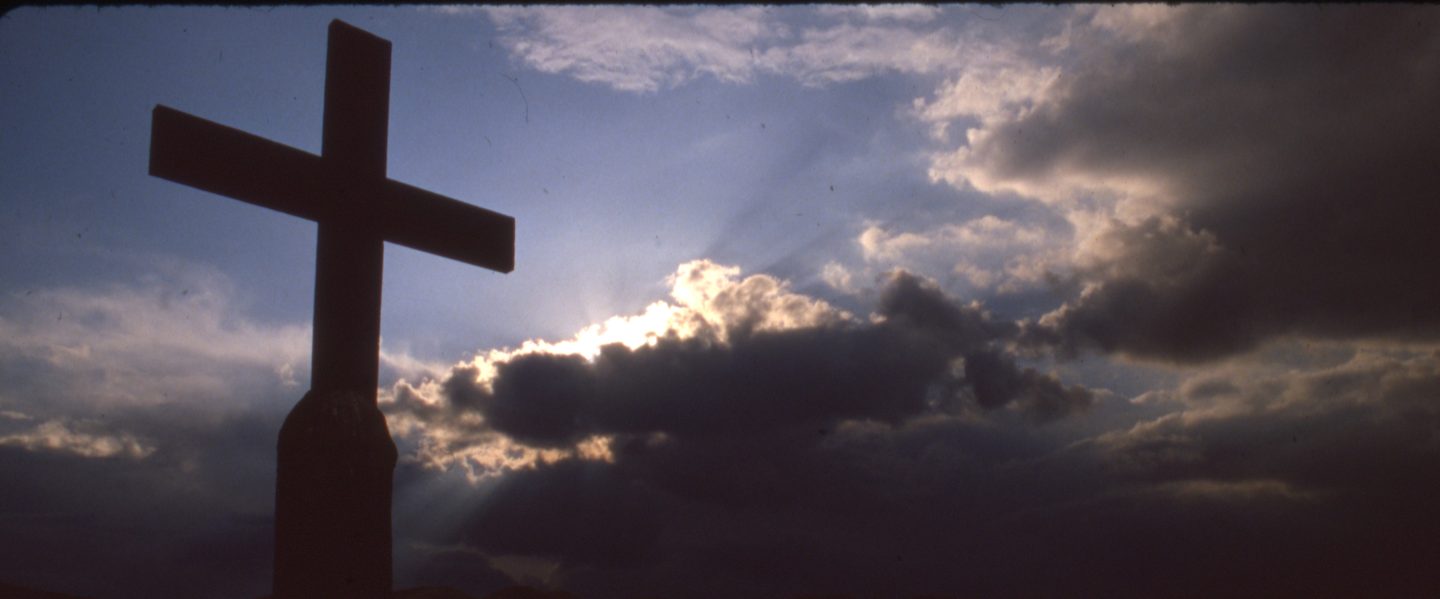
I think about my life examined. Not an examination by The Judge, however. I think about people I don’t know going through my things scattered along the road, if I were to be in an accident. It reminds me of Randy Travis’s song, “Three Wooden Crosses.” And I think, “It’s not about me living, but what is left behind.” It’s about what good was there. Did I reach out and grasp the hand of another who struggles on the hike up the hill of life?
Lord, take me from today, where I am, and guide me to where I am to be, until the time I join you at The Feast. Amen.
“Train up a child in the way he should go: and when he is old, he will not depart from it.” Proverb 22:6 (KJV)
Learning to drive isn’t easy these days. There are more cars and trucks on the roads today than when I learned to drive. People seem to be in a hurry every where they go, which throws patience out the window. So several years ago, I let my son drive off the highway, on a dirt road. He learned to basics. Finally, when he was nearing the age to apply for a permit to learn to drive, I gave him a book of basic traffic and driving regulations to study. To receive a learner permit, he would have to take a written test. And for one full year, he would need to operate a vehicle on the highway only with me riding along.
When the day arrived that my son could take his written test, he said some of his friends failed on their first attempts. He said he wasn’t worried, but I could tell he was. He took the test and passed. I said that his hard work studying paid off. He looked at me and declared that he really didn’t study the book I’d given him. I asked how he knew the answers. He said simply that he watched me drive, and the answers were just common sense.
He watched me drive? For how long? He watched my impatience at someone in front of me wouldn’t drive the way I wanted–faster? He watched my mistakes? And yet he did learn enought to be able to answer test questions. Something went right. Praise the Lord, for I didn’t know I’d been teaching my son to drive. Wow!
So, I had to ask myself, what else I have trained my son to do while being unaware of it? All the things I thought I was suppose to teach him, and not once did I intend to teach him to drive, yet. Oh, oh! This all makes me look very differently at the Lord’s injunction to: “Train up a child in the way he should go: and when he is old, he will not depart from it.” Proverb 22:6 (KJV) I am a trainer, full time, in season and out. Hummmm. Sounds familiar, huh?
May the Lord grant my son remembrance of training that is proper, forgetfulness of things improper, that he may have learned from me and from others. Lord forgive me for not recognizing that all I do is observed and becomes training to others around me, especially my own children.
Lord grant us all wisdom to live righteously and centered upon Messiah.
“Dear friends, although I was eager to write you about our common salvation, I found it necessary to write and exhort you to contend for the faith that was delivered to the saints once for all. For certain men, who were designated for this judgment long ago, have come in by stealth; they are ungodly, turning the grace of our God into promiscuity and denying our only Master and Lord, Jesus Christ. Now I want to remind you, though you know all these things: the Lord, having first of all saved a people out of Egypt, later destroyed those who did not believe.” (Jude 1:3-5 HCSB)
During the time I spent in my over-the-road truck ministry, I listened to the “Family Talk” channel on XM satellite radio. “Family Talk” programming is half-hour teachings by a variety of Christian ministers. I didn’t listen to all of the programs, however; some I know are not for me, others I find easy to discount after only a few minutes. And then there are those ministers that I’ve listened to but later come to totally discount. Those, I think, are the more dangerous to my faith and my walk.
Among the ministers I enjoy, and find wholesome, is Hank Hanegraaff, the “Bible Answer Man.” His program is similar in format to a talk show, in that he answers questions from people who call on the phone or send emails. His answers questions and explains Bible passages, doctrine, and on occasion exposes teaching he considers false. Often he says in his talks not to depend upon what he says, but to check it all out ourselves. He believes that all things should be tested against scripture, even his own teaching. Though I enjoy this program, and find useful, I am obligated to examine what I hear.
This is important!
Paul wrote: “Test yourselves to see if you are in the faith. Examine yourselves. Or do you not recognize for yourselves that Jesus Christ is in you?—unless you fail the test.” (2 Corinthians 13:5 HCSB) And Jude says he wanted to write about “our common salvation but. . ..” Perhaps Jude wanted to write about the future, when we are all together with Y’shuaJesus, wanting to exclaim, “You got to be there!” Yet he felt the needs, the dangers, of this world encroaching upon those for whom he cared. He felt concerned about teachers stealing away the soul of those to whom he wrote—even us. (G-d is speaking through Jude to His chosen ones, is He not?) Jude is not the only follower of Y’shuaJesus to warn us, either. Paul wrote the Galations that he was amazed that they turned away. He wrote, “I am amazed that you are so quickly turning away from Him who called you by the grace of Christ, and are turning to a different gospel—not that there is another gospel, but there are some who are troubling you and want to change the gospel of Christ.” (Galatians 1:6-7 HCSB)
The author of Hebrews pointed out what we might call a worldliness, and a lack of progress in the faith. He wrote: “We have a great deal to say about this, and it’s difficult to explain, since you have become slow to understand. For though by this time you ought to be teachers, you need someone to teach you again the basic principles of God’s revelation. You need milk, not solid food.”(Hebrews 5:11-12 HCSB)
Teaching must bring us closer to Messiah, whether through shedding light upon the scripture or convicting us that we might come into the Light of the Lord. There are several considerations regarding teachings, whether from the pulpit, heard on the radio, read in a book, or found on the internet. These might be formed as questions about the teaching. For instance, one might ask, “How does this teaching make me feel while I listen to it?” Do I feel encouraged, convicted, or drawn closer to Y’shuaJesus? Or am I feeling alienated, guilty, confused? “Does what I am being told coincide with scripture?” When I read the scripture for myself, though another read or write it in the teaching, does it come across the same as the teaching? It is important to read the scripture before and after that which is cited, to see if it is appropriately used, and in context. “What do teachers from the past say about the scripture and its current interpretation?” There are some great sources of study—so that we might show ourselves approved, right?—that are of great help to us. One source is the free software E-Sword to which may be added Matthew Henry’s Commentary, John Wesley’s Explanatory Notes, and others. What we want to know is that what is being said today has stood the test of time, so to speak.
Does this seem like a lot of work? It should be. It must be. Jude says we must contend for the faith. Contend means struggle. We are engaged in a war—though won, we must continue to battle. It is a war for our Earthly victory. The enemy would like to destroy us, if that were possible. And if not totally destroyed, the enemy of our Lord, of our faith, would like to disable us, misdirect us, waylay us that we not progress with our faith, that we not bear the fruit of a life well lived.
You can check out this website http://www.lighthousetrailsresearch.com/blog/ for warnings and updates on various strange teaching that is running rampant around the globe. And as said above, take even this site to prayer and to your reading of the Word of G-d.
May the Lord rebuke His enemies, watch over us, give us His mind that we might examine all teaching to see if it is from G-d.
“They prepared a net for my steps; I was downcast. They dug a pit ahead of me, but they fell into it! Selah! My heart is confident, God, my heart is confident. I will sing; I will sing praises. Wake up, my soul! Wake up, harp and lyre! I will wake up the dawn. I will praise You, Lord, among the peoples; I will sing praises to You among the nations. For Your faithful love is as high as the heavens; Your faithfulness reaches to the clouds.”(Psalms 57:6-10 HCSB)
“Dear friends, we are God’s children now, and what we will be has not yet been revealed. We know that when He appears, we will be like Him, because we will see Him as He is. And everyone who has this hope in Him purifies himself just as He is pure.” (1 John 3:2-3 HCSB)
All hope abandon ye who enter here (From Dante’s Divine Comedy)
What the World Needs Now Is Love, according to a popular song from 1965, with lyrics by Hal David and music composed by Burt Bacharach. It was first recorded, and made popular by Jackie DeShannon. The song was later recorded by and made famous by Dionne Warwick. (Wikipedia)
Here we are, 45 years later, and as Y’shuaJesus warned, the love of the world continues to wax cold. It lacks hope, which is certainly what the world needs now. The closer we get to the gates of Hell, the more fearful the world becomes, realizing what Dante, in his Divine Comedy, describes as entering Hell: “All hope abandon ye who enter here.”
Playing to the needs of a world shedding its hope is a man from seeming obscurity, who became the president of the United States. Leading up to the presidential elections, a poster was produced that came to symbolize one party’s promise to America, and the entire world. The description of it from Wikipedia reads: “The Barack Obama hope poster is an image of Barack Obama designed by artist Shepard Fairey, which was widely described as iconic and became synonymous with the 2008 Obama presidential campaign. It consists of a stylized stencil portrait of Obama in solid red, white (actually beige) and (pastel and dark) blue, with the word “progress”, “hope”, or “change” below (and other things in some versions).”
Hope is defined as “Confidence in a future event; the highest degree of well founded expectation of good; as a hope founded on God’s gracious promises; a scriptural sense.” In sharp contrast to hope, is wish or desire. We often say, “I hope it is nice tomorrow.” We assume the person we say this to defines nice in a similar manner as we do. But is this hope? Don’t we wish it were going to be nice? We don’t know what the weather will be like, do we? Even if we check with meteorologists, there is only a prediction about tomorrow’s weather. How many times has it rained when it was “suppose to be” nice?
Can a man or woman be hope itself? Or can a man or woman only help us achieve our wishes, or desires?
Perhaps it might be argued that a man or woman might be “That which gives hope; he or that which furnishes ground of expectation, or promises desired good,” as is one definitions of hope. Is this true hope? Is it not rather an opinion or belief not amounting to certainty? For it to be hope, it must be grounded on substantial evidence. Hope must have some expectation of obtaining it, or a belief that it is obtainable. It must be based upon experience, whether our own or proven within the person in who we trust our hope. It involves confidence in, and trust in, someone or something.
So, for the scriptural point of view (is there any appropriate other viewpoint for a person who is said to be a Believer?), who is our hope? In whom do we hope? In whom do we trust? “. . .but set apart the Messiah as Lord in your hearts, and always be ready to give a defense to anyone who asks you for a reason for the hope that is in you.” (1 Peter 3:15 HCSB)
Hope dwells within us, as Believers. The Spirit of the One and only G-d dwells within us. We have this hope, for we BELIEVE the Gospel. Y’shuaJesus died and rose from death to ascend into Heaven. Y’shuaJesus, summed up so well in the first letter of John, “What was from the beginning, what we have heard, what we have seen with our eyes, what we have observed, and have touched with our hands, concerning the Word of life– that life was revealed, and we have seen it and we testify and declare to you the eternal life that was with the Father and was revealed to us– what we have seen and heard we also declare to you, so that you may have fellowship along with us; and indeed our fellowship is with the Father and with His Son Jesus Christ.” (1 John 1:1-3 HCSB)
What the world needs now is hope. And we are fallen humans who despair so easily. We need leaders, strong leaders, who will inspire hope within us, yes. Ought we look, though, to our leaders to be our hope, to send us hope? This question was answered long ago: “I lift up my eyes to the hills. From where does my help come? My help comes from the LORD, who made heaven and earth. He will not let your foot be moved; he who keeps you will not slumber. Behold, he who keeps Israel will neither slumber nor sleep. The LORD is your keeper; the LORD is your shade on your right hand. The sun shall not strike you by day, nor the moon by night. The LORD will keep you from all evil; he will keep your life. The LORD will keep your going out and your coming in from this time forth and forevermore.” (Psalms 121:1-8 ESV)
Our hope is in Y’shuaJesus. And upon Him shall we wait. “We wait for the LORD; He is our help and shield. For our hearts rejoice in Him, because we trust in His holy name. May Your faithful love rest on us, LORD, for we put our hope in You.” (Psalms 33:20-22 HCSB)
“After six days Jesus took Peter, James, and John and led them up on a high mountain by themselves to be alone. He was transformed in front of them. . .” (Mark 9:2 HCSB)
The sermon outline—RBC Ministries pastor resources at http://pastor.resourcesforyourministry.org/— is broken into two parts. The first part examines Mark 9:1-8, the transfiguration of the Messiah. We are told that this is one of three times that our Lord’s identity has been displayed to some of His followers. The outline for part one concludes with the following statement: “We need time away from the demands of the ministry to commune with the Lord of glory. It is the only fitting preparation for ministry.”
Part two of this outline comes from Mark 9:14-29, which tells of Jesus and the three disciples descending the mountain and confronting desperate need. The outline briefly discusses the challenge of three great needs: A desperate parent; a demon-possessed child; and the defeated disciples.
These outlines are great for providing starting points for our sermons and teachings. What I think is so very special is that there are lots of other stimuli that occur during the week to augment the outline. For instance, a song on the radio tells of a mother whose three-year-old child died. We are told of her pain, and the singer says he doesn’t know what to say to this women in her anguish. All the singer knows is that the Father in Heaven will turn this pain into joy some day. The singer allows us to feel the anguish and the hope.
In a news report I am told of all the marvelous drugs that are prolonging the lives of people who are HIV positive. Unfortunately, according to the report, there are no drugs helping children who are born HIV positive. These children die in agony, early.
And if all this isn’t bad enough, anti-Christian activists in the United States are so happy that the tide is turning in American culture and politics. The “religious right” have been defeated and a new, liberal regime is in power that declares the United States is no longer just a Christian nation. A newspaper article informs us that the traditional view the Bible and Christian faith is seriously being challenged. A professor is declaring that the Bible is not the literal word of G-d. There are simply, according to him, too many inconsistencies. This professor even declares that the early apostles thought Y’shuaJesus was coming back, but later realized, when He didn’t, that the world was just going to go on and on. This professor tells us that it was only later that the idea of a second coming was brought out.
It is fascinating to me that the professor is doing exactly what Peter warned: “First, be aware of this: scoffers will come in the last days to scoff, following their own lusts, saying, “Where is the promise of His coming? For ever since the fathers fell asleep, all things continue as they have been since the beginning of creation.” They willfully ignore this: long ago the heavens and the earth existed out of water and through water by the word of God.” (2 Peter 3:3-5 HCSB)
In thinking about seeing needs, it is clear to me that one of the dangers of this seeing is becoming overwhelmed at the immensity of the need. So it seems that we come off the hill of glory after revelations of Y’shuaJesus are given to our hearts, our eyes are opened, and we face a needy world. We face this needy world until we no longer can do so. Then we go back up the hill, to regain our selves with Y’shuaJesus. We go back to the roots of our faith, gaining strength from our encounter with Holiness. Thus we walk in a cycle of communion and service.
So let us climb the Mount and be transformed with Messiah. Let us see Him anew. Let us be changed, too. And let us come down to see the needs, know how to proceed, have the strength to work. And when finally we feel finished and used up, let us once again return to the Mountain of Glory. All the while, let us keep watch for Y’shuaJesus’ appearance, for He comes like a thief in the night.
“After six days Jesus took Peter, James, and John and led them up on a high mountain by themselves to be alone. He was transformed in front of them. . .” (Mark 9:2 HCSB)
Computers and the world-wide web offer us tools we can us to enhance our understanding of the Word of G-d and help us in our ministries. For years I’ve received and enjoyed Our Daily Bread. It is a monthly pamphlets containing devotionals by various staff writers of a ministry in Michigan, USA. Our Daily Bread is also available, updated daily, on the internet at http://www.rbc.org/odb/odb.shtml .
The same ministry, RBC Ministries, has pastor resources at http://pastor.resourcesforyourministry.org/ . The sermon outline titled “Mountain of Glory; Valley of Need” caught my attention this morning. It is an expository on Mark 9:1-28 in two parts. The background for the sermon introduces the scriptural connection between a mountain and a need waiting in the valley below. This sermon is based upon a book, Mountains and Valleys, by G. Campbell Morgan. Some examples of mountains and valleys are: after Moses ascended Mt. Sinai, he descended into the valley to face a people in need of discipline; Y’shuaJesus gave the Sermon on the Mount and a very needy man with leprosy waited in the valley below; in the transfiguration story, the glory of the Mount is followed immediately by a great need in the valley below—a demon-possessed boy and his desperate father who hopes for deliverance that the nine other disciples of Y’shuaJesus are unable to give.
The author of this sermon outline takes us through the transformation providing some interesting points about it with some supporting details. The following are key points: 1) The Experience; 2) The Appearance; 3) Celestial Visitors; and 4) The Suggestion. Furthermore, the outline author points to various “affirmations” of the identity of Y’shuaJesus as Messiah. This question is one that is put to the disciples, as told in the preceding chapter of Mark. “Who do people say I am? Who do you say I am?” In the conclusion to part one, we are told: “We need time away from the demands of the ministry to commune with the Lord of glory. It is the only fitting preparation for ministry.”
I don’t think the outline is meant to provide a sermon-in-a-can for us. It is, however, a great way to begin our own thinking process, and it provides references to help us out. For instance, I came to the following conclusion from reading this outline: During the times in which we are refreshed, there is a tremendous communion with Y’shuaJesus, and His identity as Messiah is affirmed to us as well as our identity in Him. It is a transformation of seeing Y’shuaJesus in a different, holy way. Y’shuaJesus isn’t the man we’d seen before. He is elevated into the heavenly realm, made pure and shining white. He is neither the baby in the cradle nor the man dying on the cross. He is G-d. And we stand before Him.
As we too make this connection, this communion with the Apostles who stood on the Mount with Y’shuaJesus, another transformation occurs. It is us who are transformed in the way we see ourselves. We are elevated to a heavenly status, too. We are in the company of angels and martyrs and saints. We are included in the people of G-d, with our names written in the Book of Life.
Finally we are transformed in another way as well. We now see others differently than before our elevation with Messiah. We were in the valley before coming to the Mount. There in the valley were needs. Desperate fathers, demonized sons, poor, outcasts. All were there. But we didn’t see them. We didn’t have the eyes. Then we stood on the Mount with Y’shuaJesus. He was transformed. We saw Him anew. And we, too, were transformed. We come down the Mount and we see the need around us. And now we are empowered by the Messiah to meet that need.
Let us climb the Mount and be transformed with Messiah. Let us see Him anew. Let us be changed, too.
“For whoever keeps the whole law and yet stumbles in one point, he has become guilty of all.” (James 2:10 NASB)
Some memories remain vivid despite their age. It’s been nearly twenty years since the day I began to like myself. It began in a terrible way. I’d been on a train from the north of India going to New Delhi. I’d been literally on my knees, bent over my backpack, as there were no seats in the fourth-class car on which I rode. The train arrived at my station, but people were crowding into the car. I was trapped by a mass of bodies preventing me for getting off. I yelled and thrust my 6-foot- 4-inch body out the door. As I stepped upon the platform, I realized I’d nearly trampled an old man. I looked down at his hat, fallen on the steps. I can see steps even now, yet don’t know if I picked up the hat or not.
As I walked toward the exit of the station, it dawned on me all that could have happened in my rage to leave the train. I felt badly. Horrible. If I could do that, of what else was I capable? Was I any better than a murderer? I’d tried all my life to do right, to live the law of holiness. Yet here I was stumbling on one point. How was I treating people? Putting myself before others, thrashing about exiting a train, was this righteous?
James writes that if we are guilty of one offense, we are guilty of all offenses. I am no better than the worst of the worst. And if that is true of me, then it is true of all. Oddly enough I started to like myself. I realized that I’d compared myself to others without thinking about it. I was better than the man in prison, but not as good as the preachers whose works I read or listened. But if I’m no better than the worst, I’m as good as the best because of Y’shuaJesus, who makes us all equal in Him.
I began to understand what James writes to us about not esteeming one person more highly than another. Y’shuaJesus is present equally in all that believe in Him. James calls to us to show mercy for “mercy triumphs over judgment.” (James 2:13) Y’shuaJesus said, “Blessed are the merciful, for they shall receive mercy.” (Matthew 5:7)
Mercy, as defined in my Bible, is “special and immediate regard to the misery which is the consequence of sins.” As believers, we can be merciful to ourselves, for Y’shuaJesus showed us mercy. We can be merciful to others, for Y’shuaJesus showed them mercy, too.
“We exercise this mercy through our compassion for the misery of sin,” or so the lexical aid in my Bible states. I wonder about this statement. Perhaps it means I’ll treat a person mercifully if I understand deeply that person is caught in the misery of sin. After all, how easily I could be caught, trapped, by some sin.
Thank You, LORD, for the grace shown to us, the undeserved mercy we’ve obtained from You. Enable us by Your Spirit to show mercy to others, to love others, to love ourselves. AMEN.
“And the child grew and became strong in spirit and was in the deserts until the day of his showing to Israel.” (Luke 1:80 MKJV)
A few weeks ago we celebrated Succoth, also known as the Feast of Tabernacles. Jewish people, along with Messianic Jews (believers in Y’shuaJesus) remember and celebrate forty years of desert wandering after the exodus from Egypt. There are Christians who celebrate The Feast in Jerusalem each year, too. They do so to show kindness to Israel when so many of our world have turned cold shoulders to our brethren of the Bible. During The Feast small tents are built near homes, where meals are eaten and many sleep. Even Y’shuaJesus came to The Feast (John 7).
Once, years ago, a man told me that when The Messiah returns He will make the whole world a garden. I admit to arguing with him just to argue, saying I liked the desert. I was being difficult. Yet there remains my rather fond recollection of the beauty of Death Valley and the rain that enables flowers to sprout and grow, quickly flowering. There is a place called Bicycle Lake, near Death Valley, that is dry until the summer rain comes. The rain last only a short time, but fills the lake. Soon shrimp hatch, mate, and the offspring remain dormant as the water retreats, until the next rain. I remember the beauty of the Joshua trees and 100-foot- (32-meter-) high piles of boulders in the southern California desert. And there are the dunes near the Salten Sea, too. And I remember the way the wind caressed the sands of the Sahara.
But I’ve not lived long in such places. And I didn’t have to search from my water, for my food.
It was a harsh desert in which Israel wandered, in which a generation of disobedient people died. Yes, the LORD provided for His people while they wandered. But nonetheless, the wandered. We who know Y’shuaJesus as our savior realize we once lived in a sort of desert, too. Our old spiritual flesh had to die that we might cross the river into a spiritual promised land. Thus we were born again, spiritual re-birth.
The desert is also a place into which we escape. We get away from modern distractions, modern ways of living, get back to basics with G-d. Monks made pilgrimage to deserts to live in the harsh climate, to rely upon prayer and the Word of G-d for their sustenance. Y’shuaJesus went into the desert, where He was tempted after fasting forty days.
When we read of Israel’s wanderings in the desert we learn to look for things in our own life we must die to, things we must leave behind. When we remember things of our own lives we remember the way G-d has changed us. It is in this remembering that The Feast can have meaning for us today.
Reading the Book of Joshua, I was struck by this: when Israel crossed the Jordan, they had lost the mana of the desert, and ate the produce of the new land. It made me think about spiritual gardens and spiritual fruit. We are to cultivate our spiritual garden, fertilizing it with the Word of G-d, watering it with our tears. Furthermore, it seems to me that the spiritual fruit we grow, we are to give away. We are to plant and replant, letting our fruit grow, harvest it, and give it away. Is the fruit patience? We remember the times we were not patient. We read G-d’s Word on patience. We give patience away in our dealings with our family, friends, and (yes) our enemies.
Charles H. Spurgeon wrote: “. . . we are married unto Christ. He hath betrothed us unto himself in righteousness and in faithfulness, and he who is joined unto the Lord is one spirit. Oh! marvelous mystery! we look into it, but who shall understand it? One with Jesus, so one with him that the branch is not more one with the vine than we are a part of the Lord, our Savior, and our Redeemer! While we rejoice in this, let us remember that those who are made partakers of the divine nature will manifest their high and holy relationship in their intercourse with others, and make it evident by their daily walk and conversation that they have escaped the corruption that is in the world through lust. O for more divine holiness of life!”
“Whoever comes to Me and hears My Words, and does them. . . .” (Luke 6:47 MKJV)
Some came to hear Y’shuaJesus speak, just because they yearned for something they couldn’t define. Some came to ridicule, to test this Teacher from the hills. Some came to the Master for what they needed—healing, cleansing. Men carried a friend on a stretcher, dropping him through the roof when they couldn’t get through the door. A man climbed a tree just to see Y’shuaJesus. A woman encountered the Lord at a well. They were rich. They were poor. They were members of the religious elite. They were uneducated farmers, fishermen, housewives, and widows. All were sinners, though some didn’t think so.
The Man from Galilee could not be ignored.
I’m fascinated with the contrast between the following encounters:
“And the man out of whom the demons had gone out begged Him, desiring to be with Him. But Jesus sent him away, saying, ‘Return to your own house and declare what God has done to you’. And he went his way and proclaimed throughout all the city what great things Jesus had done to him.” (Luke 8:38-39 MKJV)
“And after these things He went out and saw a tax-collector named Levi, sitting at the tax-office. And He said to him, ‘Follow Me.’ And leaving all, he rose up and followed Him.” (Luke 5:27-28 MKJV)
The man cleansed of demons wanted to follow Y’shuaJesus, but was sent away. We don’t know what was in the tax collector’s heart, but he was called right out of his office. I think with the cleansed man, Y’shuaJesus has work from him right away, that the miracle was enough to provide him with a testimony. And courageously, the man responded by going throughout the city proclaiming Y’shuaJesus. Perhaps that was his calling, and it was enough. In the tax-collector, Y’shuaJesus saw great potential, and a heart that was ready to be shaped through very close contact with the Master.
Now take a look at these two:
“Therefore neither did I think myself worthy to come to You; but say a word, and my servant will be healed.” (Luke 7:7 MKJV)
“Peter said to Him, ‘Lord, why cannot I follow You now? I will lay down my life for Your sake.’ ” (John 13:37 MKJV)
The first man wasn’t Jewish. He says he thinks he’s not even worthy to come to Y’shuaJesus. But he did so for the sake of his servant. And he is rewarded for it. And then there’s Peter. It seems to me these two represent the two extremes of our own thinking of Y’shua. On one end, we think we are too sinful to go to the Lord, and on the other, we think we’re fully ready to do all that we are called to do. The Centurion overcame his own unworthiness, and boldly came forward. Peter learned more work was needed before he’d be able to walk in the Master’s shoes, or sandals, if you prefer.
Take a look at the following:
“Still, however, even out of the rulers, many did believe on Him. But because of the Pharisees they did not confess, lest they should be put out of the synagogue.” (John 12:42 MKJV)
These believers, I believe, represent the most common of all; they believe but aren’t willing or able to proclaim. They’re straddling the fence. They believe but aren’t acting on that belief.
The Y’shuaJesus of the scriptures was not ignored. There are times when I wonder how I would encounter Y’shuaJesus, had I lived two-thousand years ago. Would I have been one of the religious elite that was envious of this prophet? Would I have been called that I might be trained directly by the Master? If Y’shuaJesus healed me and sent me away to give my testimony, would I have done so? Would I have been afraid to obey Y’shuaJesus? Am I afraid today?
I pray, Lord, give us wisdom to hear Your voice, a mind to know Your will, and the courage to obey. AMEN.