Bobby’s Rant

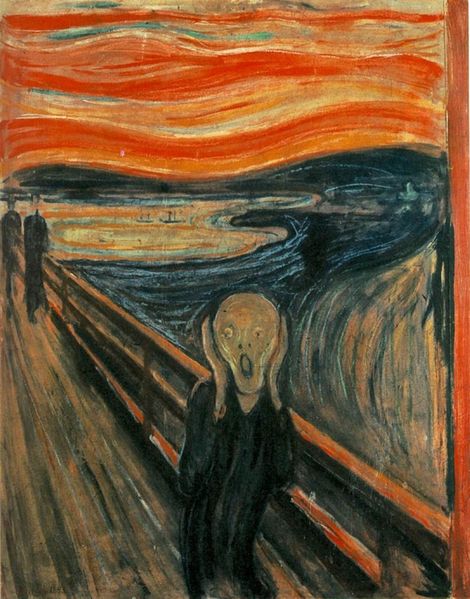
The_ScreamBobby recently vented his frustration. He said his wife, Donnybrook, “found some of my stashed food stocks. She tossed some into the trash, then put bags of rice and beans in her car trunk, saying she would give it to Salvation Army.” Bobby’s anger, barely contained, was thrust into his stomach. Several antacids later, he still felt the burning in his throat. Bobby is a passive man, and a doormat Christian. I’ve talked about Bobby and his Borderline Personality Disordered (BPD) wife. Bobby takes all Donnybrook dishes out and tries his best to smile, say he’s sorry, and forever and ever respond to all that she says with a polite, albeit meaningless, “Yes, Dear.” Poor Bobby.

Bobby is one of the many “passive men” in America. While the causes differ, Bobby said he “was raised in a home where my father doted upon my mother, yielding to every whim and fancy. All of it translated to me learning to submit totally to women.” Bobby went on to say, “It’s a generational defect: my grandfather did the same thing, and probably his father, too.”

Passive men are the feminized men of a Twenty-First Century American in decline. A report by Steve Connor, of The Independent – UK, speaks to feminization of men as displayed in a reduced sperm count, and he reports on the research into such reduction. Theories abound, of course. One is that males eating ever-increasing amounts of fat are increasing the oestrogens that interfere with male reproductive function. Another theory is that oestrogens are in the water. Connor reports that “environmentalists have suggested that it could be ‘gender-bending’ chemicals – endocrine disrupters – in the environment that are the cause of the gradual feminisation [sic] of men. But despite intense research to find these endocrine disrupters, the precise reasons for the problems have not so far been identified.”

There is some evidence that the feminization of men today is a product of our increasingly liberalized culture. “We could devote an entire book to examples of how our culture is confused (at best) about what a man is and vilifies (at worst) what it does know,” wrote Paul and Sandy Coughlin in their book, Married But Not Engaged.

What has happened over the past fifty years is that American society views women in a much more positive light that ever before, while at the same time denigrating its men. “The root idea: Men are a serious problem that must be fixed, not a gender to be appreciated. Men are not okay as men. Masculinity, in and of itself, is negative,” say the Coughlin’s. One need only turn to Hollywood, to whom the American public honors as a view of what American culture is to be. Where are the programs like Father Knows Best, Leave It To Beaver, Sea Hunt, Maverick, Gunsmoke, Bonanza, Dragnet, and a whole bunch of others with strong male leads, respectful characters? In those shows men were, well, men. What do we have for the television line up this year, and for the past several years? We have programs dominated by strong women and sniffling men. Family life, as modeled by Father Knows Best and Leave It To Beaver, has been replaced with Modern Family. GAG! Today, Hollywood shows us that when men try to be men, they are evil and deserving of criminal status. Where are the John Waynes, the Ronald Reagans, the Charles Hestons? Today, mostly, we have whiney men that portray whiny men for which women berate.

Today we have pseudo-men like Bobby who don’t fully appreciate that passivity, total appeasement of women, is sin. Bobby virtually puts his head between his knees and avoids any thought of the conflict that would ensue should he “resist the evil manipulations of a decisive, self-centered, wicked woman,” as he, himself, has described her ways. She is a Twenty-First Century Jezebel! “She condemns any opinions, any actions, that are different than hers. She presents to the world that she is always right,” said Bobby. “She works only with women, has no need for men. A modern Jezebel who need no man.” Except perhaps virtually neutered, emotionally dead, Bobby that serve her every whim and fancy. “When a man does not feel needed, something in him dies. Even an emotionally healthy man turns passive and loses energy,” say the Coughlin’s. Thus, satan wins in the continued seduction and fall of Adam.

Numbers-6-24-26 - 1

A Devotion from “The Supplied Life,” by Bill Freeman

For what the law could not do in that it was weak through the flesh, God did by sending His own Son in the likeness of sinful flesh, on account of sin:He condemned sin in the flesh. Romans 8:3

“Whether or not we understand all that is in the law of the Spirit, when we touch this law we get all that is in God. So it is a great matter to be a person oriented to the Spirit, to be according to the Spirit. It is not a small thing to wake up in the morning and find your orientation to yourself by contacting the Lord– by fellowshipping with Him, opening to Him, interacting with Him, surrendering afresh to Him, that His life could be lived out. This means stopping yourself and taking every problem– whether at the start of it, in the middle of it, or near the end of it– wherever you find yourself, and bringing yourself to the Spirit. It is in the realm of the law of the Spirit that everything has been accomplished and all our problems are solved.

The Supplied Life, by Bill Freeman is available on Amazon

“It is a marvelous thing to interact with the realm of the Spirit. This realm is not just a feeling, not just our emotion. We are interacting with the Father’s sending of the Son and with the Person of the Son and His full accomplishment. This includes everything that is incorporated into Him. Christ has become a life- giving Spirit to give us His kind of life. He is giving us His own incarnated life, His human life, His crucified life, His resurrected life, and His ascended life. This is the kind of life He is giving. This is the only kind of life He gives. He does not give any other kind of life. Thus, the life we experience in Him will be conformable to His human living, crucifixion, resurrection, and ascension.”—from THE SUPPLIED LIFE, by Bill Freeman.


Bill Freeman has ministered the Word for over forty years in California, Arizona, and Washington. He is the editor of a periodical publication called The Christian, and founder of Ministry of the Word, Inc., a ministry serving the Body of Christ through publications, the Internet, and conferences. Bill is a graduate of Fuller Theological Seminary and has written over forty books, booklets, and outline studies on the believer’s experience of Christ in daily life and its practical relationship to the church.


Numbers-6-24-26 - 1

Life is a Balancing Act

Oh, that Israel’s deliverance would come from Zion!
When the Lord restores the fortunes of His people,
Jacob will rejoice; Israel will be glad.
Lord, who can dwell in Your tent?
Who can live on Your holy mountain?
The one who lives honestly, practices righteousness,
and acknowledges the truth in his heart —
who does not slander with his tongue,
who does not harm his friend
or discredit his neighbor,
who despises the one rejected by the Lord
but honors those who fear the Lord,
who keeps his word whatever the cost,
who does not lend his money at interest
or take a bribe against the innocent —
the one who does these things will never be moved. Psalm 15

“David here outlines the virtues that render a person worthy of dwelling in Hashem’s “tent” and residing in His “sacred mountain.”  According to the Radak, David refers here to the resting place of the soul in the afterlife; it is thus here where we are told how a person earns his eternal share in the world to come.  The Radak draws proof to this reading from the chapter’s final clause, where David exclaims, “he who does these shall not falter, forever.”  The term “forever” implies that David refers here to eternal peace, which would suggest that he speaks of the soul’s reward in the afterlife.

“In listing these virtues, David focuses first on proper interpersonal conduct: honesty and integrity (verse 2), and refraining from crimes such as gossip, causing others harm, and nepotistic protection of unworthy relatives (verse 3).  In verse 4, he imposes an important qualification on the virtues of loving kindness and concern for others: “Nivzeh Be’einav Nim’as,” which Rashi translates to mean, “The shameful one is despicable in his eyes.”  Although this prototype acts with love and sensitivity, he is at the same time prepared to confront evil and its advocates, rather than extend to them the same kindness and compassion he shows generally.  He respects those who deserve respect, while condemning behavior that warrants condemnation.

“The Ibn Ezra and Radak explain this verse differently, as meaning that the person sees himself as “shameful” and “despicable.”  Despite his many fine qualities, he recognizes how much more he has to grow and accomplish in order to achieve perfection.  Rather than falling into the trap of stifling complacency, he constantly strives to improve and to accomplish more.

“The message conveyed by this Psalm is thus a dual one.  On the one hand, David promises eternal life to everyone who lives in accordance with the basic values of honesty and Godliness; the world to come is not reserved for only the great Tzadikim who have reached the highest levels of spiritual devotion.  At the same time, however, to earn eternal life one must spend his life in the pursuit of perfection, working each day to grow and become better than he is.  This Psalm does not demand that everybody be perfect, but it does not demand that everybody work towards and strive for spiritual perfection.” —Daily Tehlllim Psalm 15

“Here is a very serious question concerning the character of a citizen of Zion. It is the happiness of glorified saints, that they dwell in the holy hill; they are at home there, they shall be for ever there. It concerns us to make it sure to ourselves that we have a place among them. A very plain and particular answer is here given. Those who desire to know their duty, will find the Scripture a very faithful director, and conscience a faithful monitor. A citizen of Zion is sincere in his religion. He is really what he professes to be, and endeavors to stand complete in all the will of God. He is just both to God and man; and, in speaking to both, speaks the truth in his heart. He scorns and abhors wrong and fraud; he cannot reckon that a good bargain, nor a saving one, which is made with a lie; and knows that he who wrongs his neighbor will prove, in the end, to have most injured himself. He is very careful to do hurt to no man. He speaks evil of no man, makes not others ‘faults the matter of his common talk; he makes the best of every body, and the worst of nobody. If an ill- natured story be told him, he will disprove it if he can; if not, it goes no further. He values men by their virtue and piety. Wicked people are vile people, worthless, and good for nothing; so the word signifies. He thinks the worse of no man’s piety for his poverty and mean condition. He reckons that serious piety puts honor upon a man, more than wealth, or a great name. He honors such, desires their conversation and an interest in their prayers, is glad to show them respect, or do them a kindness. By this we may judge of ourselves in some measure. Even wise and good men may swear to their own hurt:but see how strong the obligation is, a man must rather suffer loss to himself and his family, than wrong his neighbor. He will not increase his estate by extortion, or by bribery. He will not, for any gain, or hope of it to himself, do any thing to hurt a righteous cause. Every true living member of the church, like the church itself, is built upon a Rock. He that doeth these things shall not be moved for ever. The grace of God shall always be sufficient for him. The union of these tempers and this conduct, can only spring from repentance for sin, faith in the Savior, and love to him. In these respects let us examine and prove our own selves.” —Matthew Henry’s Concise Commentary

Two perspectives on a psalm of King David. One from a Jewish Commentator; the other from a Christian commentator. Both perspectives point to the obligations to live in the balance between justice and kindness. Rev. Henry wrote: “The union of these tempers and this conduct, can only spring from repentance for sin, faith in the Savior, and love to him. In these respects let us examine and prove our own selves.” From Tehillim we learn that “. . . to earn eternal life one must spend his life in the pursuit of perfection, working each day to grow and become better than he is.  This Psalm does not demand that everybody be perfect, but it does not demand that everybody work towards and strive for spiritual perfection.”

The only difference I find between the Jewish and Christian way of living is those who know Y’shuaJesus as Messiah have accepted they work toward perfection so that they may live eternally in the House of the LORD, yet understand it  is never earned, but granted by the one Who gave His life, that died, rose, and lives so we may live today without regret and live forever with Him in the House of the LORD.

Numbers-6-24-26 - 1

Ramblin’ September 2015

Some times I need to ramble to discover my thoughts. It’s filling white space with random, un-edited, and un-analyzed thoughts in order to connect various points. In this way things make sense, or not. . .

So, here we are toward the end of Rosh Hashanah, which began at sundown last Sunday, September 13, 2015, and concludes with Yom Kippur, which begins sundown on Tuesday. This is time for observant Jews to repent, make amends, and do good deeds to show their worthiness to be inscribed for a good year next year.

In addition to the obligations of which I feel responsible, I’ve been thinking about what exactly is the Image of the Beast. Here follows my notes, my ramblings:

Rev. 13:14
The First Beast is given his power by Satan. The Second Beast has all the authority of the First Beast and he compels all people to worship the First Beast, uses signs, and deceives people into making an image of the First Beast and take upon them a Mark. He also gives a spirit to the image of the First Beast that speaks and causes death to those that won’t worship him. None are allowed to buy, sell, or trade without the Mark.

The Image. It is seen as a statue, to some, that will talk to people and kill those that don’t obey the laws of the First Beast, which is a form of worship.

One commentary (Jamieson, Faust, and Brown, pub. 1878) speaks of the First Beast as the combined world powers: “Hence, the world powers seeking their own glory, and not God’s, are represented as beasts; and Nebuchadnezzar, when in self- deification he forgot that “the Most High ruleth in the kingdom of men,” was driven among the beasts. In Da 7:4- 7 there are four beasts:here the one beast expresses the sum- total of the God- opposed world power viewed in its universal development, not restricted to one manifestation alone, as Rome. This first beast expresses the world power attacking the Church more from without; the second, which is a revival of, and minister to, the first, is the world power as the false prophet corrupting and destroying the Church from within.”

In reading Jamieson, et al, commentary, the healing of the wound of First Beast coincides with the rise of Second Beast. This beast is perhaps from within the church, but has the Worldly wisdom to back it up. It supports First Beast. This according to the commentators only occurs in the Last Days before the return of the King, the Lord.

“The first beast is physical and political; the second a spiritual power, the power of knowledge, ideas (the favorite term in the French school of politics), and scientific cultivation. Both alike are beasts, from below, not from above; faithful allies, worldly Antichristian wisdom standing in the service of the worldly Antichristian power:the dragon is both lion and serpent:might and cunning are his armory. The dragon gives his external power to the first beast (Re 13:2), his spirit to the second, so that it speaks as a dragon (Re 13:11). The second, arising out of the earth, is in Re 11:7; 17:8, said to ascend out of the bottomless pit:its very culture and world wisdom only intensify its infernal character, the pretense to superior knowledge and rationalistic philosophy (as in the primeval temptation, Ge 3:5, 7, “their EYES [as here] were opened”) veiling the deification of nature, self, and man. Hence spring Idealism, Materialism, Deism, Pantheism, Atheism. Antichrist shall be the culmination. The Papacy’s claim to the double power, secular and spiritual, is a sample and type of the twofold beast, that out of the sea, and that out of the earth, or bottomless pit. Antichrist will be the climax, and final form. PRIMASIUS OF ADRUMENTUM, in the sixth century, says, “He feigns to be a lamb that he may assail the Lamb– the body of Christ.”

It seems to me that Matthew Henry’s Commentary (pub. 1706) agrees in some respects with Jamieson et al on First Beast as a dominating power and Second Beast a spiritual power supporting the political power base. Interestingly, Matthew Henry writes of the wounds as the dying of the pagan idolatry and the new First Beast puts forth a re-branding of the pagan as popish idolatry that is the “same in substance, only in a new dress, but which as effectually answers the devil’s design.”

In some ways this sounds very much like the Roman Empire that persecuted Christians, then became the Roman Catholic Church, which has always re-branded pagan doctrines as its own “Christian” doctrines, that is these days doing the same thing with the New Age movement and adopting the “Green Agenda,” which is all the rage of the current political leadership of the United States and Europe.

Still remains in my mind is what exactly does it mean: Second Beast “telling those who live on the earth to make an image of the beast who had the sword wound and yet lived. He was permitted to give a spirit to the image of the beast, so that the image of the beast could both speak and cause whoever would not worship the image of the beast to be killed.”

What would this image look like, what would it be. It is an image of a power structure that has complete political, and obviously military, power over the people of Earth. It gains abilities to communicate to Earth’s inhabitants and kill them if they don’t go along. Could it be an implant that guides the people who accept it? Are the conspiracy theorists right that there will be an RFID chip involved? But it would go much further than simply being a tracking device, for it would be capable of two-way communications, and it would be lethal. There are RFID UHF devices capable of two-way communications up to around 100m. I haven’t determined if the RFID can communicate locally, however. Mostly the RFIDs are for tracking inventory, making payments (as with credit cards), and are used in some way within wireless devices. The latter point is interesting. I occurs to me that there could be a smart chip that monitors certain sensor inputs and responds accordingly. For instance, how about an RFID for a medical purpose that monitors blood pressure, and triggering a transmit when sensing elevated BP. The received signal could then activate an alarm, locally, or be retransmitted to a 911 operator. That’s perhaps the Mark of Beast One, but not the image.

Of Second Beast, Rev. Henry wrote: “It exercised all the power of the former beast. It pursues the same design, to draw men from worshipping the true God, and to subject the souls of men to the will and control of men. The second beast has carried on its designs, by methods whereby men should be deceived to worship the former beast, in the new shape, or likeness made for it. By lying wonders, pretended miracles. And by severe censures. Also by allowing none to enjoy natural or civil rights, who will not worship that beast which is the image of the pagan beast. It is made a qualification for buying and selling, as well as for places of profit and trust, that they oblige themselves to use all their interest, power, and endeavor, to forward the dominion of the beast, which is meant by receiving his mark. To make an image to the beast, whose deadly wound was healed, would be to give form and power to his worship, or to require obedience to his commands. To worship the image of the beast, implies being subject to those things which stamp the character of the picture, and render it the image of the beast. The number of the beast is given, so as to show the infinite wisdom of God, and to exercise the wisdom of men.”

Hum. So the business dictionary defines corporate image as: “Mental picture that springs up at the mention of a firm’s name. It is a composite psychological impression that continually changes with the firm’s circumstances, media coverage, performance, pronouncements, etc. Similar to a firm’s reputation or goodwill, it is the public perception of the firm rather than a reflection of its actual state or position. Unlike corporate identity, it is fluid and can change overnight from positive to negative to neutral. Large firms use various corporate advertising techniques to enhance their image in order to improve their desirability as a supplier, employer, customer, borrower, etc. The image of Apple computer, for example, as a successful business has dimmed and brightened several times in the last 30 years. But its identity (conveyed by its name and multicolored bitten-off-apple logo) as an innovative and pathbreaking firm has survived almost intact during the same period.”

Read more: http://www.businessdictionary.com/definition/corporate-image.html#ixzz3mJOf7rLU

In the Church realm, how do people “see” the churches in America? Those that are acceptable, by the Twenty-First Century standard seeming must accept homosexuality and abortions as acceptable in society, among other things. But more, the church must be supportive of the agenda of those in political power. Hence, we find that church support the “Green Agenda.” As does the Pope support this through his speeches about Global Warming/Climate Change. We are to believe, too, the lie. Thus, we worship First Beast, as pressured by Second Beast. As Rev. Henry wrote: “To worship the image of the beast, implies being subject to those things which stamp the character of the picture, and render it the image of the beast.”

Numbers-6-24-26 - 1

Model Prayer

Father in heaven,
Your name be honored as holy.
Your kingdom come.
Your will be done
on earth as it is in heaven.
Give us today our daily bread.
And forgive us our debts,
as we also have forgiven our debtors.
And do not bring us into temptation,
but deliver us from the evil one. Matthew 6:9-13. (HCSB version)

The other day I began to pray The Prayer, and stopped after the first two words: “Our Father.” The LORD is the Master of the Universe. The LORD is G-d. The LORD is One. And The LORD is Father to His chosen. How awesome is this knowledge. How incredible to be a child of the Most High King. Wow! Echoing King David, this knowledge is too wonderful for me. This awesome moment still lingers, warming my heart.

Yet I’ve considered before the concept of G-d as our Father. In the early 1980s I was blessed to attend Calvary Chapel Irvine, then pastored by Chuck Smith. I was in Irvine for a two-week electronics course, and able to attend during the week as well as on Sunday. Pastor Smith spoke on various aspects of The Lord’s Prayer. I don’t recall all that he taught.

And there are books on this subject, too, I discovered. I perused one written by a Rabbi. He wrote about אָבִינוּ מַלְכֵּנוּ (Avinu Malkeinu), which is translated Our Father, Our King. It is a prayer recited on Rosh Hashanah and Yom Kippur during services. It is said to be the oldest and most moving of the prayers. It is taken from Isaiah 63:16, Our Father, and Isaiah 33:22, Our King.

Speaking of Rosh Hashanah, it begins tomorrow (Sunday Sep. 13, 2015) at sundown. It begins ten days of repentance that concludes with Yom Kippur. The traditional blessing for this period of time is: “May you be inscribed and sealed for a good year.”

Lord Bless y’all. May you be inscribed and sealed for a good year.

Numbers-6-24-26 - 1

A Song of Ascent

Psalm 127 is one of the Psalms that are called “A Song of Ascent.” There are fifteen of these Psalms, corresponding to the fifteen steps that the Levi ascended to the Temple. One Psalm, tradition states, is said on each step in the processional up to the Temple.

Unless the Lord builds a house,
its builders labor over it in vain;
unless the Lord watches over a city,
the watchman stays alert in vain.
In vain you get up early and stay up late,
working hard to have enough food —
yes, He gives sleep to the one He loves.
Sons are indeed a heritage from the Lord,
children, a reward.
Like arrows in the hand of a warrior
are the sons born in one’s youth.
Happy is the man who has filled his quiver with them.
Such men will never be put to shame
when they speak with their enemies at the city gate.

“A number of commentators explain this Psalm as a poem David composed upon being informed that his son Shelomo, rather than he, would be given the privilege of building the Bet Ha’mikdash. In the first two verses, David declares that it is God, not man, who determines when a building will arise. Regardless of how hard the laborers toil or how carefully the watchmen guard the building site, the project will materialize only with the direct assistance and support of the Almighty. David here accepts God’s decree forbidding him from building the Mikdash, recognizing that if God does not wish for him to build it then even if he would try the endeavor would assuredly fail.

“In the Psalm’s final verses (3-5), David turns his attention to the great blessing of children, whom he compares to “arrows in the hands of the mighty warrior” (verse 4). A warrior’s most valuable asset is effective weaponry; for a religiously conscientious Jew, the greatest commodity and blessing is children who follow the Torah traditions that he received from his parents. David thus expresses his gratitude for the fact that his son would perpetuate his legacy and heritage. Although he desired to personally oversee the building of the Mikdash, he found solace in the fact that he leaves behind a son faithful to his teachings, and who will fulfill Am Yisrael’s collective dream of having in their midst an abode for the Shechina (Divine Presence).” —Daily Tehillim

Matthew Henry comments: “Let us always look to God’s providence. In all the affairs and business of a family we must depend upon his blessing.
1. For raising a family. If God be not acknowledged, we have no reason to expect his blessing; and the best- laid plans fail, unless he crowns them with success.
2. For the safety of a family or a city. Except the Lord keep the city, the watchmen, though they neither slumber nor sleep, wake but in vain; mischief may break out, which even early discoveries may not be able to prevent.
3. For enriching a family. Some are so eager upon the world, that they are continually full of care, which makes their comforts bitter, and their lives a burden. All this is to get money; but all in vain, except God prosper them:while those who love the Lord, using due diligence in their lawful callings, and casting all their care upon him, have needful success, without uneasiness or vexation. Our care must be to keep ourselves in the love of God; then we may be easy, whether we have little or much of this world. But we must use the proper means very diligently.

“Children are God’s gifts, a heritage, and a reward; and are to be accounted blessings, and not burdens:he who sends mouths, will send meat, if we trust in him. They are a great support and defense to a family. Children who are young, may be directed aright to the mark, God’s glory, and the service of their generation; but when they are gone into the world, they are arrows out of the hand, it is too late to direct them then. But these arrows in the hand too often prove arrows in the heart, a grief to godly parents. Yet, if trained according to God’s word, they generally prove the best defense in declining years, remembering their obligations to their parents, and taking care of them in old age. All earthly comforts are uncertain, but the Lord will assuredly comfort and bless those who serve him; and those who seek the conversion of sinners, will find that their spiritual children are their joy and crown in the day of Jesus Christ.”

While there is some overlap in the thinking behind the commentaries, I also see a perspective that differs substantially. It illustrates my own thinking that Christianity has diverged from Judaism, going its own way, leaving behind a wealth of tradition AND a wealth of accompanied understanding. Judaism, on the other had, is stuck with tradition and its understanding. Without the Christian perspective of Y’shuaJesus as the Messiah, Judaism of today is doomed to simply wait. Judaism waits until G-d enables their minds to understand the Messiah Who came, Who is spoken of in Isaiah 53, is the suffering Messiah, is the same Messiah Christians have come to accept, and Who shall come again as the Conquering Messiah.

One Messiah. Two perspectives. Each perspective lacks something, however. Slowly this is changing for some people. Unfortunately it seems the “church” as a whole pulls away from Y’shuaJeus and His truth. As Psalm 127 points out, a building can not be built without G-d. And certainly the “church” tries in vain to build itself. Preachers gather pupils who listen to every word, but miss The Word, because the preachers so often preach from their own agenda, their own “gospel.”

Gentiles were allowed to have a taste of the Shechina, the Divine Presence, of G-d. But the Time of the Gentiles are coming to and end. The “church” has melted its gold and is forming a golden calve to worship. Soon, I believe, All the Shechina of our Lord with come to bear upon the Jewish people, and their eyes shall be opened that they might know Y’shuaJesus as Lord, as Messiah.

Numbers-6-24-26 - 1

Blue Moon

No. Not the beer It was a real blue moon—the second full moon of July.

BlueMoonSail - 1
taken with my phone.
The white line across the photo is the boat’s lifeline. In the distance is a small island.

In the early evening I went out to the lake for a sail on Cassandra, a 25 foot Cape Dory sailboat. The dusk is long, bright, this time of year. And the moon, though not huge like a harvest moon, greeted me warmly.

Ashore the temperatures weren’t even dropping from their highs in the 90s. But on the lake with the wind out of the northwest around 5-8 mph, it was pleasent; and it was just enough to fill the sails. I glided easily up the lake. The water gurgled gently as the bow of the boat parted it.

It felt peaceful. I felt peaceful. I felt at peace.

Later, when twilight fled, the moon could only slightly brightened things up. What few boats on the water turned on their lights. The wind picked up a bit as I headed back to the cove in which I keep Cassandra. Just a few hours on the water. A very nice few hours.

I thank G-d for those few hours with Him on the lake. He restores my soul.

He leads me beside quiet waters.
He renews my life. . .

Psalm 23:2-3

Numbers-6-24-26 - 1