
WordPress Photo Challenge
“Narrow“

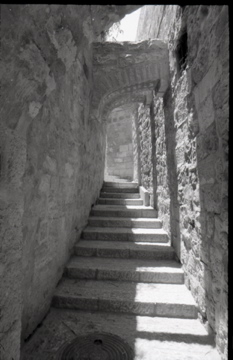

Strive to enter through the narrow door. For many, I tell you, will seek to enter and will not be able. Luke 13:24

Strive to enter through the narrow door. For many, I tell you, will seek to enter and will not be able. Luke 13:24
“What’s it all about when you sort it out, Alfie?” Sings Burt Bacharach in the back ground. Just pretend you here it too. It sets the electronic stages, so to speak.
 As I initially set up JonahzSong, I explored in my mind what the central theme would be. For a few years I’d been writing a once to twice weekly devotional column distributed by a ministry in Australia. That ministry dropped the devotionals, moving in a different direction. I was still interested in devotionals, but I wanted to just write. I subtitled the blog, “But I with the voice of thanksgiving will sacrifice to You; what I have vowed I will pay. Salvation belongs to the L-RD. Jonah 2:9.” For me, it attempted to clarify the theme for JonahzSong, as well as explaining the meaning behind JonahzSong.
A few weeks ago, I took an online course in Blogging through WordPress. It was a good course, despite having been at this blog for a while now. One area it probed was the thematic approach to a Blog. What’s the central theme. It reminded me that I could re-evaluate the theme of JonahzSong. Am I on track? Have I deviated? If so, do I need to be drawn back? My answer is that I am on track—sort of. Even if I think I am, it seems prudent once and a while to examine things to see. Like Apostle Paul spoke about, at the end, it would be a shame if I ran the race in vain. So, initially, I just want to write with an aim at speaking to one or two or more persons who may find something to draw them closer in their walks with the Lord Jesus. JonahzSong needs to do four things, not necessarily at one time.
First, there is the inspiration toward Thanksgiving. Second, there is inherent in writing a sacrifice that benefits another person. Third, I wanted to write once-upon-a-time back in high school. I wandered around doing a lot of other things, thought did write for publications before and some after a degree in journalism. At the time, I thought I needed to have a career in writing. Now, with JonahzSong, with a Blog, I don’t need to earn a living from it. So I have the opportunity to write, and I simple need to discipline myself to do so, without the journalistic favorite of a deadline. So, I write to fulfill a vow, to myself. (There’s always a selfish element to what we do.) Fourth is along the lines of traditional devotionals, which attempt to share the knowledge that salvation belongs to the LORD.
So how’s it all work for the reader, reading someone’s rambling attempts? Here’s the way it worked for me the other day. I read a devotional by a pastor up in Michigan. It was a good devotional. It was concise, well written, and had several points that directed my attention to Jesus and one specific result. I realize that is important. One outcome of many is given. The writing is general enough for a divergent audience, yet provides a concise take away. For me, one of the best things about the devotional was that I was propelled toward the Lord to continue that study and find for my additional nuggets, pieces that drew attention to a missing piece of an emotional puzzle. The pastor wrote a value-added devotional.
I also realize that for my writing, I was inspired by Warren, whom I spoke about once. He shared with me how his wife volunteered him when his church’s pastor called for mentors, which he defined as “having made a lot of mistakes and being willing to share them.” It’s not enough to cry out “Jesus Saves!” There is a need to share the why and the how it has happened, and allow the reader to seek for his or her own salvation from the LORD.
All that said, I confess there are time when I wonder if anyone actually gets anything out of JonahzSong. It’s on those times that I need to consider it this way.
O LORD, in the morning you hear my voice;
in the morning I prepare a sacrifice for you and watch. Psalm 5:3
Lord Bless, Keep, Shine. . .
Not really much on confronting people, I often used to simply talk about them behind their backs. That’s not a great thing to do, and isn’t it gossip? Is gossip right conduct? No. But what’s there to do if I’m offended by someone’s actions? I’m still not much on confrontation. Lot of questions.
“Hang in there!” isn’t something one wants to hear after sharing a particularly severe trial or painful ordeal. It’s usually said as the person walks away, perhaps as an afterthought. Clearly the person doesn’t relate, doesn’t understand the pain, or can’t deal with it. And then there’s the time someone gets all scripture-quoting with advice, “Be still, and know that I am God.” Psalm 46:10 is a great verse, but does it really apply to our particular need or stance?
Being pretty literal in my approach to life and scriptures, I think of it in terms of stopping all action. I think in terms of taking time to plan next steps, or regroup from a previous event. It’s less physical, slowing down. Or I suppose it could mean simply to calm down. It’s a plea to consider G-d’s input on a particular direction. I stop and look around, and promptly get nervous after a short time wondering if when I am suppose to act next. I come upon a plan, a particular desire that has set upon me, and want to go, go, go.
One particular time I remember being totally unable to do anything to move ahead and out of a particularly bad situation in which I found myself. Change was needed, but it felt as though I was stuck in a bucket of cement. I had the means to literally move away, and into another job hundreds of miles away. But I felt totally unable to move. In the end, someone else took it upon themselves to act on my behalf; things came together and the change was thrust upon me—the cement fell away. I fretted too much the whole time, unfortunately. Take a look at how Peter handled things.
Peter was sleeping between two soldiers, bound with two chains, and sentries before the door were guarding the prison. And behold, an angel of the Lord stood next to him, and a light shone in the cell. He struck Peter on the side and woke him, saying, “Get up quickly.” And the chains fell off his hands. And the angel said to him, “Dress yourself and put on your sandals.” And he did so. And he said to him, “Wrap your cloak around you and follow me.” And he went out and followed him. Acts 12:6-9
Bound is what I’m talking about. Sometimes there are emotional chains that bind. For Peter, it was literal chains that bound him. What did Peter do? Fret about it? Nope! He fell asleep between two soldier while more soldiers guarded the prison doors. I like this next part a lot. A light illuminates the cell. Peter continues to sleep. The only way to wake Peter was getting stuck in the side. Then he’s ordered to dress, wrap his cloak around himself and to follow the angel. Peter thought he was still asleep, having a vision, so he got up and followed.
Peter wasn’t in a boat in the middle of a stormy sea. It wasn’t a matter of calming the waves and getting the strength to continue rowing. Peter was bound and needed rescuing. The Lord sent help. And Peter was unbound.
Lord Bless, Keep, Shine. . .
At the helm of a small boat in a storm. Or maybe it was when I was a very young child, at night trying to sleep, and the monsters attacked. It’s all the same, really. I am fearful. I cry out in distress. It is my mother that pops her head in the door, light shining into my dark world. I can’t really scream, but simply gasp.
“Oh, dear, it’ll be okay. Go back to sleep,” she’d not say. Would she? If she did say that I can picture the scene in my head.
“Don’t you see them,” I’d gasp, barely able to cry out. I can imagine the terror of monsters crawling toward me as the door closes and my mother walks away.
“It turned out nice again, didn’t it?” she’d say as she walks away. That is what she always said when unpleasant things happened. But despite that, my mother still wouldn’t walk away.
I remember one time when I was maybe six or seven years old. I felt sick and had a nightmare. My mother gathered me into her arms and carried me into the living room. She and my Dad were watching the “Phil Silver’s Show” on their first television. It had a smaller screen than an iPad and was in black and white. I remember being wrapped in a Welsh wool blanket, and sat between them for the remainder of the show. Then, calmed and feeling a bit better, I was carried back to bed.
Immediately he made his disciples get into the boat and go before him to the other side, to Bethsaida, while he dismissed the crowd. And after he had taken leave of them, he went up on the mountain to pray. And when evening came, the boat was out on the sea, and he was alone on the land. And he saw that they were making headway painfully, for the wind was against them. And about the fourth watch of the night he came to them, walking on the sea. He meant to pass by them, but when they saw him walking on the sea they thought it was a ghost, and cried out, for they all saw him and were terrified. But immediately he spoke to them and said, “Take heart; it is I. Do not be afraid.” Mark 6:45-50
Those guys were in a major panic. Waves taller than their boat was long threatened to toss them into the water. The wind whipped them about, trying desperately to turn the boat broadside to the wind, where it would capsize with the next wave. Were they exhausted trying to row against the wind, the waves? I am sure they were.
“Take heart; it is I. Do not be afraid.”
“What are you talking about?” they’d try to scream if they could catch their breaths. “You’re just a spirit and can’t drown out here alone in this awful water.” What comfort are words in a time of distress. Sure. Y’shuaJesus sent them out into the water, and now saw their distress. He came to them, too, across that water. All he’s going to do is peak at them through a closed door and say, “Don’t worry, dear.” That it?
I read a short devotional in which the well-meaning author wanted us to understand that when we are in the midst of trails and don’t feel the comfort of the Lord in our lives, He will see us, come to us, speak to us. When I read it it bothered me. It was too open ended. The Lord says everything’s fine. Don’t worry. Go back to those waves that look like they are going to consume you, and just relax, don’t be afraid. Those disciples must have known that’s not the end of the story. Our Lord, our G-d, isn’t going to leave us stranded in the middle of a raging storm. My mother didn’t shut the door and say sleep tight.
And he got into the boat with them, and the wind ceased. Mark 6:51
That, like Paul Harvey said at the end of his radio broadcast, “Is the End of the Story.”
When the LORD sees I am in great distress, He comes to me, speaks gently to me, AND gets right next to me in my storm-tossed boat and wraps His arms about me. I close my eyes and my storm is calmed, my wind ceases, the wrath toward me is ended.
The LORD is One, The LORD is G-d. Thank you LORD.
Lord Bless, Keep, Shine. . .
Recent world events have people fearful. Mr. Donald Trump made much of the reality of a dark world during his acceptance speech for the Republican Party’s nomination as the American Presidential Candidate. Even Christians are concerned.
The Billy Graham Evangelistic Association posted the following:
Lord Bless, Keep, Shine. . .
Bobby said he wants to write about his experiences with his crazy wife. He said no one would believe him if he wrote or even told anyone the things that have gone on in his life. Except me. I believe him. Bobby figures as a story, it could pass as weird fiction. He said he played around with beginning a story of a routine incident, that is pretty mild, just to get things started. Routine incident, is how Bobby put it. Those are like when a bolt of lightening strikes a tree next you when it’s a perfectly wonderful day, all blue sky with no clouds. Bobby’s story begins like this:
“It’s a small world after all.” Luke was dozing off. He thought he heard the song playing from the Disney ride, thought he was on it. That nice gentle ride with music from countries all across the world. Soothing. Calming. Dozing off.
It’s a small world, it’s a small world
It’s a small world, it’s a small world
It’s a world of laughter, a world of tears
It’s a world of hope and a world of fears
There’s so much that we share, that it’s time we’re aware
It’s a small world after all.
“You need to tell him he wears too much cologne.” From where did that come?
“I haven’t noticed,” Luke said. “If you don’t like it, tell him.”
The bump Luke felt next jolted him upright in his seat. He wasn’t on the Small World ride. This was Space Mountain and the cars had reached the top.
“I SAID YOU NEED TO TELL HIM,” she spat, venom drooling down her chin.
“IT’S YOUR JOB AS HIS FATHER TO TELL HIM THAT HE SMELLS HORRIBLE AND. . .”
Luke’s rollercoaster car was now dropping downward, picking up speed, and he was still groggy from his nap. The car headed for the first and biggest curve.
“Well, I don’t notice any smell,” Luke said. “Perhaps you’re just a bit over sensitive.”
Screams as everyone on the first rollercoaster car were thrust to the right. Luke’s car lurched up, down, then it felt as though it would fly off the track. Luke was awake now. He grasped the rail as he was flung to the right.
“MAYBE IT’S THE WAY YOU DO HIS LAUNDRY,” Luke’s wife screamed louder than if she’d really been on a rollercoaster ride.
Woosh! Luke’s wife heading for front door. Whump! The front door slams shut.
“Hope the door didn’t hit you in the butt on your way out,” mumbled Luke
When I spoke with Bobby, he said his wife was still not speaking with him, and it had been three days. He told me it it will all be over in another day. That was a small rollercoaster ride. Major blow ups take a lot longer to get under control.
I asked Bobby once why he didn’t do something about his wife’s behavior. He said he read about personal boundaries, and even tried them. It made things worse for him. Eventually Bobby will leave his wife—once the kids are old enough to be on their own. He said there is no way he’d leave the kids with someone as crazy as she is to fend for themselves.
Bobby’s wife’s behavior isn’t at all uncommon. There are about 14 million Americans like her—with Borderline Personality Disorder (BPD). According to the National Education Alliance for Borderline Personality Disorder this disorder “occurs in the context of relationships: sometimes all relationships are affected, sometimes only one. It usually begins during adolescence or early adulthood.”
“While some persons with BPD are high functioning in certain settings, their private lives may be in turmoil. Most people who have BPD suffer from problems regulating their emotions and thoughts, impulsive and sometimes reckless behavior, and unstable relationships.
“Other disorders, such as depression, anxiety disorders, eating disorders, substance abuse and other personality disorders can often exist along with BPD.”
What about treatment, I once asked Bobby. He told me it was sorta like the psychiatrist and the light bulb joke. Heard it? How many psychiatrists does it take to change a light bulb? Only one, but the light bulb has to be willing to change.
BPD affects both men and women. It is women that fair the worse and they are the ones most heard about. Men with BPD can be physically as well as emotionally abusive. We don’t hear as often about men in relationships with BPD women. It’s difficult for a man to admit a woman literally rules his days and nights.
Christian women often have it very bad. They are often told by their pastors and other church members, that they must submit themselves to such treatment, because it is somehow Biblical. Bobby said he’s of the opinion that any pastor or Christian that says anyone must submit to abuse is totally out of line, not walking with the Lord, and shouldn’t be paid any attention. He says those people will be judged. Harshly.
Lord Bless, Keep, Shine. . .
The Things We Leave Behind The Daily Post at WordPress.
It hadn’t occurred to me where I might be going, I just knew I was to leave Jerusalem very soon. I also knew it would be a long time before I’d return. I sorted out some things to give away, and other stuff not worth keeping I simply tossed. I packed a box of things to send to my folks; they’d store them in their attic with other things I’d left there. I knew I needed to travel light. I had only one thing left, my autoharp.
Some years before I’d learned to play the autoharp while staying in Morro Bay, California. It was the only instrument that I did well at playing. As a child, my mother tried to teach me piano. She was a graduate of the London College of Music. She’d played at a Welsh National Music Festival, the Eisteddfod. I was born with music in my soul and poetry running through my veins. I was not a good music student, much to my mother’s disappointment. The trumpet and the clarinet were next, but never truly did I master them. Later I tried the guitar and the recorder. Neither seemed to suit me well. But the autoharp, that was me.
 I enjoyed singing praise songs accompanied by the autoharp. I felt a bit like a modern King David, praising the Lord with his harp. One year I and my autoharp traveled from Greece to Wales on a series of buses and trains, with stops along the way. I spent a “pilgrimage” on Mt. Athos, where I sat near an old monetary playing that autoharp and singing praise songs to the Lord. Through Turkey and the old Yugoslavia, Italy and into to France, autoharp in hand, backpack slung on across my shoulders. Across the Channel and through England and finally to Wales.
When I went to Israel, my autoharp went with me. I fell in love with Israel, especially with Jerusalem. I loved the Hebrew folk music and psalms I learned. I loved the people with whom I worked, and to whom I ministered. But when it was time to leave, I knew it was time to leave behind my autoharp. It was time to say good bye. I played that autoharp near the Temple. It had to stay. How could I play it any where else? It felt like it was part of Jerusalem and must remain. So I donated it to a music academy.
I think about that old autoharp every once and a while. One day, Lord willing, I shall return to Jerusalem. The music academy said, when I left the autoharp there, that I could use it whenever I was back. That was over twenty-five years ago. Will it still be there where I left it behind?
Lord Bless, Keep, Shine upon you. . .
By the waters of Babylon,
there we sat down and wept,
when we remembered Zion.
On the willows there
we hung up our lyres.
For there our captors
required of us songs,
and our tormentors, mirth, saying,
“Sing us one of the songs of Zion!”
How shall we sing the LORD’S song
in a foreign land?
If I forget you, O Jerusalem,
let my right hand forget its skill!
Let my tongue stick to the roof of my mouth,
if I do not remember you,
if I do not set Jerusalem
above my highest joy!
—Psalm 137:1-6
Battles have opening shots, as do politicians, directed against enemies perceived and real. Comedians have opening lines, while the Olympics have opening ceremonies.
Dr. Waldrop said on a table in a lecture hall waiting for the first class of the semester to settle in.
“Good morning,” he said casually.
A few murmurs were heard and a few said “hi.” Most of the guys were only half present, not necessarily wanting to be there but wanting student deferments; we really didn’t want to go to Viet Nam. Dr. Waldrop walked quietly to the back of the hall, exited though double doors, re-entered. Slamming the door shut, he raced down the aisle, resuming his place on stage.
“GOOD MORNING!” That got our attention.
A frail old man entered an assembly of seminary students, teetering occasionally, walked to the lectern, grasped it firmly, and looked out at the young students’ faces.
“Jesus loves me,” Alan Redpath sang. “Jesus loves me, this I know. . .”
Faces turned slowly toward that old pastor, whose voice cracked occasionally as he continued singing.
“For the Bible tells me so;
Little ones to Him belong;
They are weak, but He is strong.”
The hall was quiet except for the lone voice calling out.
“Yes, Jesus loves me!
Yes, Jesus loves me!
Yes, Jesus loves me!
The Bible tells me so.”
Pastor Redpath sang the entire song. By time he finished, not a dry eye was to be seen.
That’s the way to open whatever is worth opening.
Lord Bless, Keep, Shine. . .
Okay. Yesterday I quoted Apostle Paul’s description of the outward signs of love. In that description, he wrote:
Love bears all things, believes all things, hopes all things, endures all things. 1 Corinthians 13:7
I ended the post with my advice to Bobby, and probably everyone else, to flee unkindness. How can I say that when Apostle Paul makes it clear that love is supreme and demonstrating love means never having to say your sorry. Oops. Got a song stuck in my head. No, he said love endures all things. That could mean that love endures unkindness. So even though unkindness is wrong, and a sin, we are obligated to endure it in someone. Really? There’s got to be a caveat in there somewhere. After all, unkindness is a sin. Unkindness is just plain wrong. Unkindness is murder—soul murder.
Seems to me, that a person that puts up with another person’s sin, is contributing to it. And that means enduring a sin is a sin.
What do you think?
Lord Bless, Keep, Shine. . .
 Jonah’s Song